
2026 Book Reviews
August
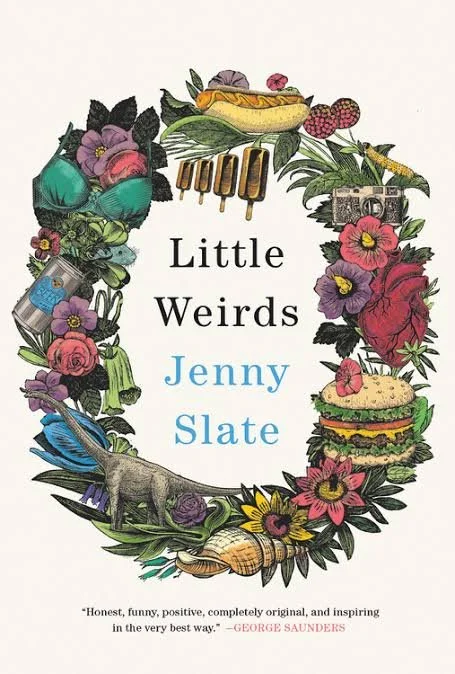
Little Weirds | Jenny Slate | Hardcover | August 2026 | 240 Pages
Two essays into Little Weirds by Jenny Slate, I set the book down. This is just too weird, I thought. Three nights later, I picked it up again and told myself I’d read just a couple of pages more to see if I could get into it.
I’m so glad I did.
Slate, who you might know as an actor/comedian from Parks & Rec and Dying for Sex, published this debut in 2019. The book blurb struggles to categorize it. Is it a set of personal essays? Fever dreams? Memoir? Fantasy? Whatever it is, I needed it desperately. You know how sometimes you read the right book at the right moment? This was that for me.
Written in the wake of a divorce and subsequent heartbreak, Slate wrestles with her hopes and hopelessness, the beauty and the pain of living in the wild world, the animalistic power and joy of female friendships, and the horror of misogyny. The language is so strange that I hesitate to share how much I truly loved and wholeheartedly recommend this book, lest you’ll discover how strange I am on the inside.
All that I can tell you is that I dog eared pages, underlined passages in pen (which I never do). I took the book with me to the beach in the morning and read one of the essays out loud to the sea like a prayer.
I give Little Weirds 5⭐️’s.
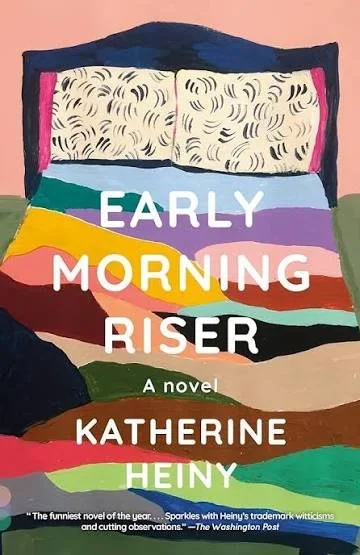
Early Morning Riser | Katherine Heiny | Paperback | August 2026 | 336 Pages
I saw a sign outside of a bookstore once that said, “A bookcase is like a wine cellar. You collect books to be read at the right time, the right place, and the right mood.” That was all the permission I needed to let my TBR pile overflow. I keep a lot of books there. When I’m ready to begin a new one, I scour the shelf for something that strikes me as right for the moment. Last month, that was Early Morning Riser, by Katherine Heiny.
I learned from the epigraph that the book got its title from a song by The Weepies, my favorite band back in the late 2000’s and 2010’s. It’s the story of Jane, a second grade teacher who relocates to Michigan for a teaching job and quickly falls in love with Duncan, who has dated just about every woman in town and the next town over. Jane wants his love and commitment so deeply, but he’s not that kind of guy. Jane’s search for love and family takes some unexpected turns—both tragic and sweet—and brings her to a place she never expected.
I liked this book okay. The writing was strong, and the plot was unpredictable and compelling. The cover includes a blurb from The Washington Post, which calls it “The funniest novel of the year.” Reviewers shouldn’t be allowed to say things like this, because it sets an unfair expectation. There was nothing outrightly funny about this book! Some witty dialogue and sharp thoughts, maybe, but nothing that made me laugh out loud. The New York Times review on the back cover said it better: “At its heart, this is a serious story full of lightness.”
My favorite passage:
“Eventually, Jimmy sort of ran out of steam and stopped talking, but Jane didn’t mind. It was enough just to sit with him on the porch, looking at the dew sparkling on the grass and the sun shooting biblical-looking rays of light through the pine trees. She should sit out here more often early in the morning. She and Duncan could have coffee here, start their day with calm and beauty. But she knew it was one of those things—like Sunday afternoon drives and mother-daughter yoga class and vacuuming refrigerator coils—that she would think about but never actually do again, and that made it all the sweeter.”
I give Early Morning Riser 3.5⭐️’s.
July
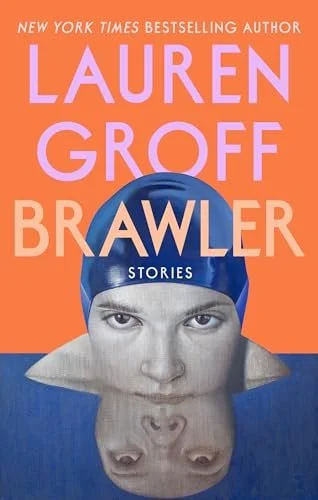
Brawler | Lauren Groff | Kindle | July 2026 | 281 Pages
This short story collection from Lauren Groff takes the reader through a series of slices of life—each an inflection point in the life of the protagonists. The stories are loosely connected in that each involved swimming or some sort of body of water, but I didn’t realize this until it was pointed out to me. I suppose it is signaled in the bold, arresting book cover, which is how this title reached out to me.
I haven’t read many short story collections; the last was probably The Best American Short Stories of 2002 in some high school class. I wonder why an experienced and proven author like Groff would write in this format. Why not a full novel?
As I turned the pages, I also wondered: Why would someone write about such horrific scenarios? Each story ended with impending heartbreak: kidnapping, abandonment, murder, death. The writing is gorgeous, and I couldn’t believe how immersed I felt in each character’s world in only a few pages. But I found myself emptied out by this book. Some of the images will stay with me, unwelcome, for a long time.
I give Brawler 3⭐️’s.
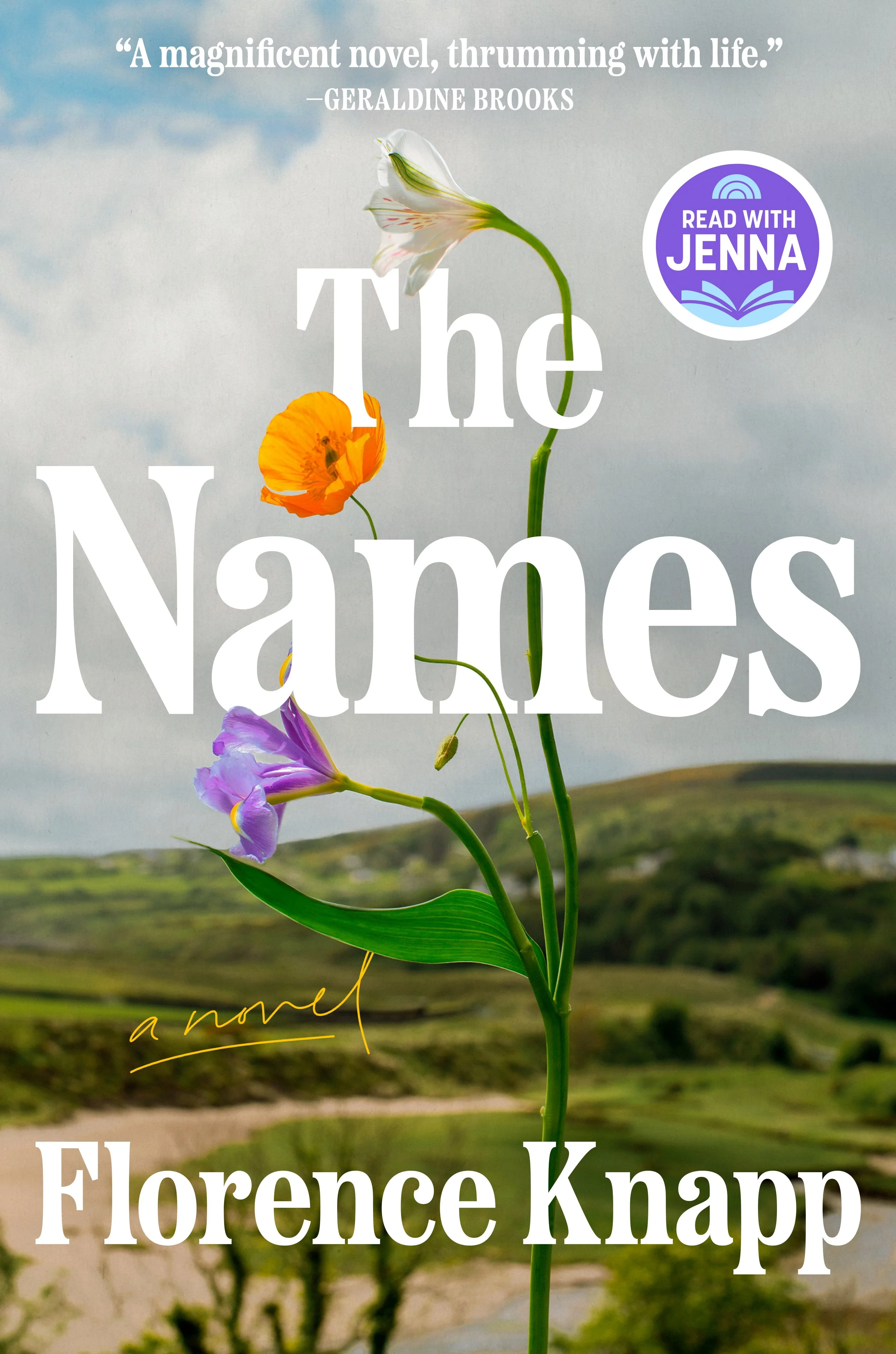
The Names | Florence Knapp | Kindle | July 2026 | 336 Pages
The Names opens with mother Cora and her young daughter, Maia, taking their new baby boy to the name registration office. Cora’s controlling and abusive husband, Gordon, expects the boy to be named after him and his father before him, but Cora hates the name “Gordon.” When Cora asks Maia what she thinks they should name the baby, Maia suggests “Bear.” Cora likes “Julian,” wondering if she can somehow sell the father on it as a tribute to him through its meaning: sky father.
The book follows the three parallel scenarios: How would life unfold if they register the boy’s name as Bear? Julian? Gordon? We check in on Cora, Maia, and the boy every seven years throughout their lives in these different timelines. And what a difference a name can make—in breaking or continuing the cycle of abuse, in determining the professional paths of the children, in limiting or expanding their abilities to freely express themselves.
This hopeful yet grounded debut by Florence Knapp promises a bright future. I’ll definitely be adding whatever her next title is to my list.
I give The Names 4⭐️’s.
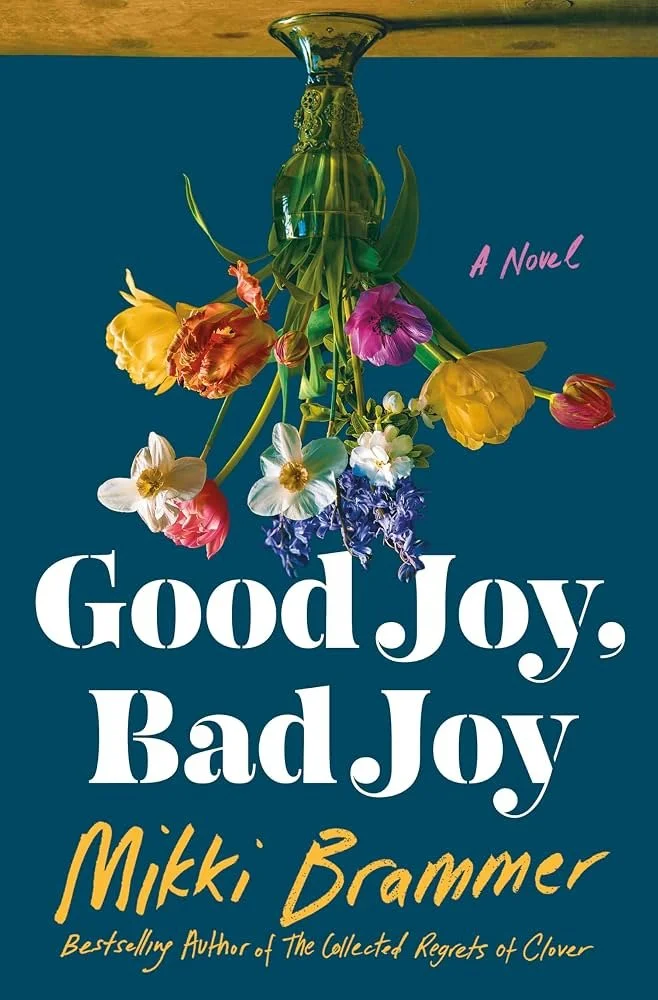
Good Joy, Bad Joy | Mikki Brammer | Hardcover | July 2026 | 304 Pages
It is a good time to be a reader—book clubs and events seem to be popping up all over my state. One that I love is called Booked, a monthly series held at a local restaurant. The organizer invites a set of five authors every month, and attendees can listen to a moderated panel discussion over dinner and drinks. I’ve been twice, and though I didn’t know any of the authors beforehand, I left a new fan of at least one of them. At the last event, I scooped up Mikki Brammer’s second novel, Good Joy, Bad Joy, after hearing all about the genesis of its plot and the challenges of getting the book to print (second novels can be hard).
Brammer’s central character is Joy, a woman of almost 89 years old who lives in Beacon, NY. She is an avid gardener, a widow, a mother and grandmother, and best friend to her childhood friend, Hazel. Each morning, upon opening her eyes, Joy texts Hazel: “Still kicking!” and Hazel answers back: “You’re still stuck with me, too!” Joy has lost so many friends over the years, and has become invisible to people around her as aging women do. Still, she moves through her days with empathy and generosity for those around her—even the former criminal who moves in down the street.
It is Hazel’s health that makes everything change: when Hazel tells joy about her terminal cancer diagnosis over lunch, Joy is bereft. Hazel was always such a boisterous and bold force in Joy’s traditional, quiet, and polite life. At the prospect of losing Hazel’s colorful presence, Joy wonders where being such a “good girl” throughout her years has gotten her. And so, she starts to be just a little bit bad.
What begins with skipping the hold list to steal a new release at her local library escalates into bigger and more serious rule-breaking. Along the way, we learn how Joy became the kind of person who always put others’ needs before her own. And we see her transform, at the age of 89, her orientation towards her life.
I identified deeply with Joy, as so many good girl/good students will. I hope it doesn’t take me until age 89 to become more of a rule breaker.
I give Good Joy, Bad Joy 4⭐️’s.
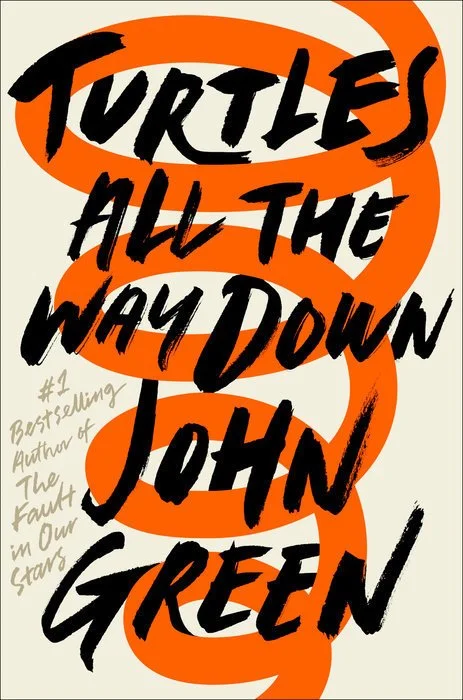
Turtles All the Way Down | John Green | Audiobook | July 2026 | 299 Pages
A high school girl solves
millionaire’s disappearance
lives with OCD
I give Turtles All the Way Down 4⭐️’s.
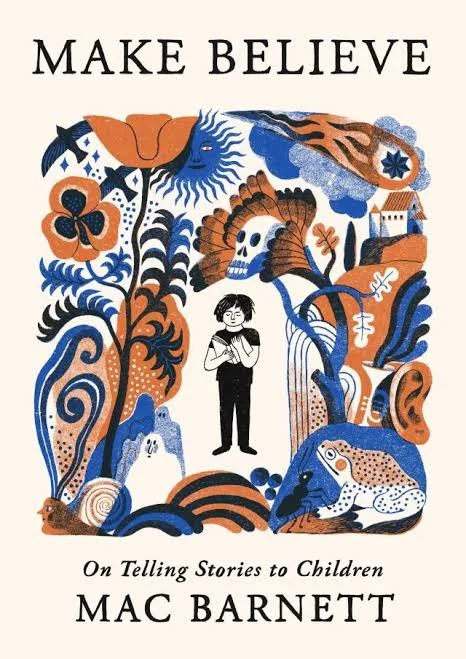
Make Believe: On Telling Stories to Children | Mac Barnett | Audiobook (read by the author) | July 2026 | 112 Pages
I listened to this little gem (just over two hours) while mowing the lawn in the high heat of July. As I followed a slow spiral around my front yard, I listened to widely published picture book author Mac Barnett wax poetic about children’s books as an art form. Barnett traces the history of the genre and the trends and beliefs that have shaped it over time, with numerous footnotes that are both informative and funny.
Barnett argues the importance of writing good books for children—but what makes for good children’s books? In one essay, he says that “94.7 percent of kids' books are crud” (following Sturgeon’s Law that 90% of everything is crap). After Make Believe was published earlier this year, Barnett received massive blowback for that comment—as the current National Ambassador for Young People’s Literature, Barnett is meant to be advocating for the genre, not breaking it down. But as someone who has had to read “The Friendship Castle” to my youngest daughter night after night (it doesn’t even properly rhyme!), I happen to agree.
Make Believe called to mind picture books that still hold a place of wonder in my heart from my own childhood (The Philharmonic Gets Dressed) and some of my favorites to read my own kids (The Important Thing About Margaret Wise Brown, which I realized in the course of listening to this book, was written with great intention by Barnett himself).
I give Make Believe 4⭐️’s.
June
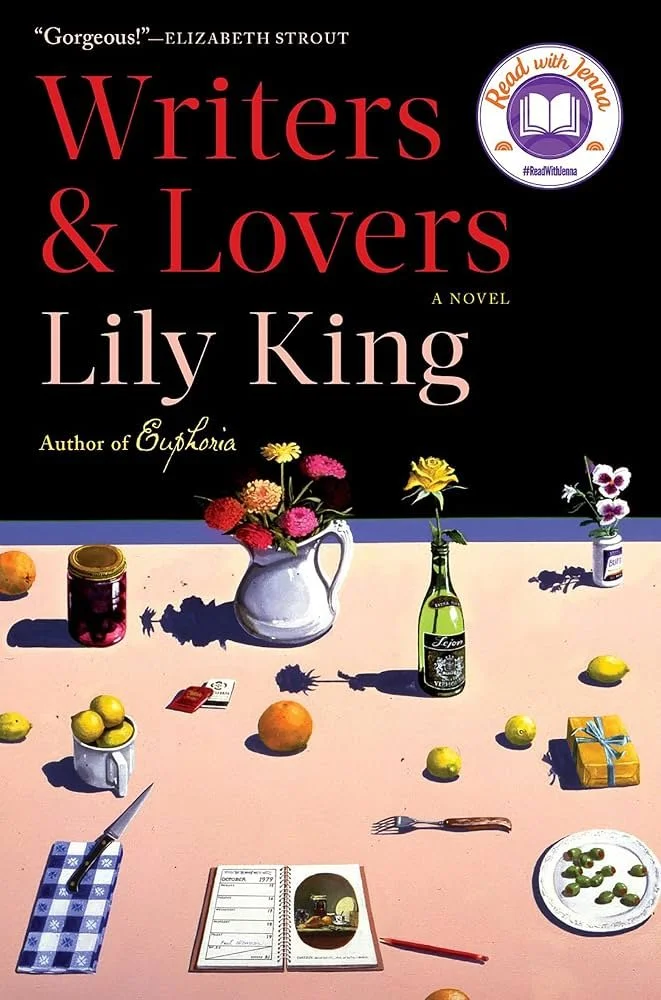
Writers and Lovers | Lily King | Paperback | June 2026 | 342 Pages
Recovering from her mother’s recent tragic death, Casey is a writer living in a potting shed in Cambridge, MA. She waitresses at a dysfunctional restaurant near Harvard’s campus to try to rub two nickels together and keep up her work on a novel inspired by her mother’s Cuban roots. She navigates grief while trying to make her way in the world, trying to say something when it feels like the world wasn’t made to care. When people find out she is a writer, they often scoff and say something like, “Are you writing the great American novel?” or “I’m surprised you think you have something to say.” Along the way, Casey meets two men who represent two very different pathways and bring up different feelings within her.
This all sounds more trite than it is. Lily King’s writing is melancholy and moving. There was a darkness and rawness to this book. Some passages that spoke to me:
“I sing to the geese. And I feel her. It’s different from remembering her or yearning for her. I feel her near me. I don’t know if she is the geese or the river or the sky or the moon. I don’t know if she is outside of me or inside of me, but she is here. I feel her love for me. I feel my love reach her. A brief, easy exchange.”
“I squat there and think about how you get trained early on as a woman to perceive how others are perceiving you, at the great expense of what you yourself are feeling about them. Sometimes you mix the two up in a terrible tangle that’s hard to unravel.”
“‘I know you’re scared. It’s scary. But I love you and we are good together. I feel so good when I’m with you. God, I like myself when I’m with you.’
‘I’m not sure that’s being in love with me, Oscar. That’s being in love with you.’”
“There’s a particular feeling in your body when something goes right after a long time of things going wrong. It feels warm and sweet and loose.”
The book started a little slow for me—I almost gave up around the 50 page mark, which is my threshold for either setting a book aside or staying the course. But then I found myself staying up late reading, one more chapter, one more chapter.
My favorite part of the book was actually an essay by the author at the very back of the book, where she describes her approach to writing (“I am like a blind worm on the ground”). I am endlessly interested in writers and writing, which is probably why the title of this book spoke to me in the first place. King’s process sounds almost intuitive, which is how it feels when I write—like there is a wise, true voice inside me dictating what I need to type. “What you need to be true to,” she writes, “what you need to abide, is what you hear inside you, what wants to come out. Listen to that. It has a story to tell.” This is so affirming as I face an essay deadline next week.
I give Writers and Lovers 4⭐️’s, and I’ll definitely seek out more of Lily King’s work.
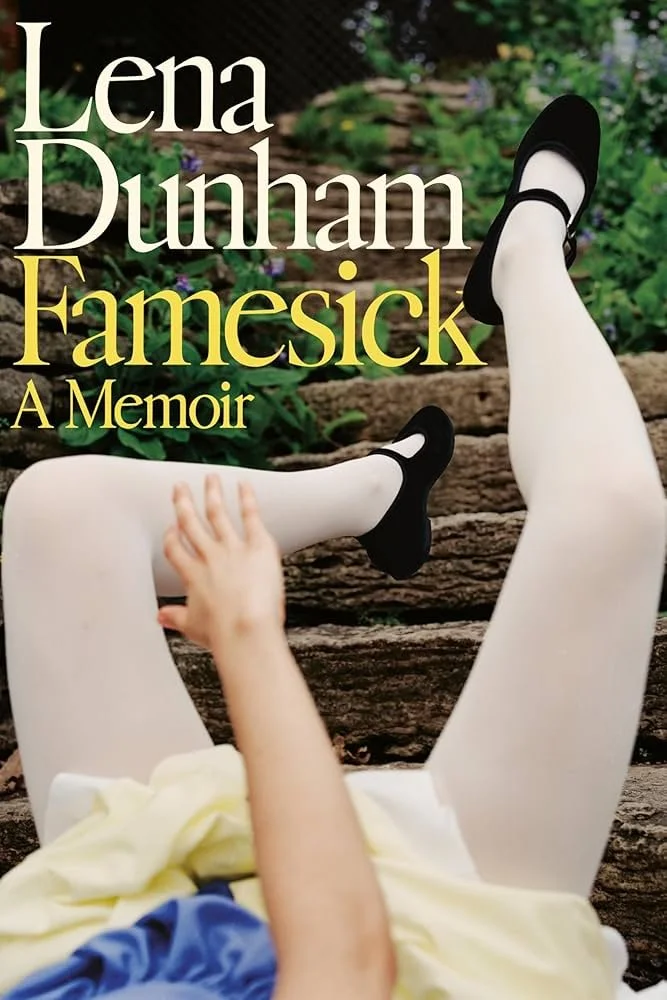
Famesick | Lena Dunham | Kindle | June 2026 | 416 Pages
Lena Dunham and I are the same age. My 20’s didn’t look anything like hers, and in no way resembled the chaos of Girls, but when I hear her speak in interviews, there is something about her voice and perspective that feels on point, familiar to me. Perhaps her voice represents my generation. I find her funny and articulate, and am astounded by her ability to walk the very fine line of taking responsibility and accountability for her past actions while acknowledging the limitations of the context she operated in. That seems like a very hard thing to do.
Her recent memoir, Famesick, catapulted me out of a reading slump. I’ve been reading, of course, but not feeling engrossed or engaged in that delicious way that a good book demands my attention. This one was hard to put down because of her voice, because of the chaos, because it was all so much wilder than I ever knew. She was so young when Girls launched on HBO.
“Often between takes, I sat in a director’s chair wearing only a bathrobe, my unshaven legs dangling, my feet barely touching the floor, like a child who had been given control of a Fortune 500 company.”
And she was so, so sick throughout the run of the show and beyond. Part of that is because of the circumstances of her particular body (she suffers from debilitating endometriosis and Ehlers-Danlos Syndrome) and because she continually was made to push herself beyond her capabilities (like the scene she filmed with an untreated broken arm).
“Looking back, this was another first—the first time I chose to ignore my body’s noisy signals in favor of this thing I wanted so badly. It seemed that the film industry was made up of people ignoring their basic human needs—sleep, time with loved ones, a reliable schedule, no domain over what they ate or where they went or when they peed. But who could blame them, when the trade-off was the chance to make magic, to play pretend for a job?”
She details her relationships with some major figures along the way: Judd Apatow, Jenni Konner, and Jack Antonoff. But what I found more fascinating than all of the famous folks was her relationship with her parents. Both of her parents are artists. They seem fiercely loyal and supportive while also driven, ambitious in their own work, and discerning with their taste. Dunham’s dad shows up in all the right moments—in L.A. to set boundaries that Lena can’t, at her bedside in NYC hospitals to advocate for her health. Her mom offers cutting and wise advice, and gives her a home whenever she needs one. They are closely knit in ways that seem foreign and fascinating to me, so different from my own experience but a beautiful and loyal family nonetheless.
At times, the book was difficult to get through—the hits just kept coming and coming, setbacks and health challenges and addiction and strange choices. Like a car crash that I couldn’t look away from. Dunham is painted as such a childish brat, so needy, so irreverent, so entitled. Really, she is one more woman that the healthcare system has sorely let down—through not believing her pain and not knowing enough about the conditions that affect the female body and how to treat them. And as she navigated all of that behind the scenes, society judged and commented on her body in sickening ways.
Now that this book is out and she seems more settled, healthy, and content, I wonder what art she will make next. I’ll always be listening for what her voice has to say next.
I give Famesick 3.5⭐️’s.
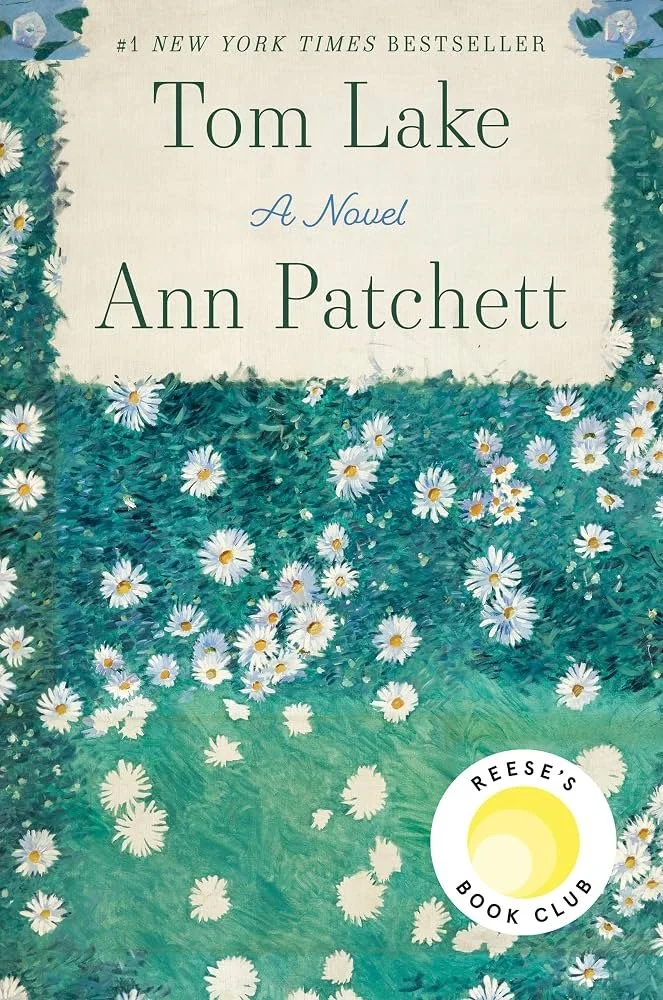
Tom Lake | Ann Patchett | Audiobook (read by Meryl Streep) | June 2026 | 309 Pages
I queued up Tom Lake by Ann Patchett not knowing anything about its plot—only that Ann Patchett is known as a masterful writer, and Meryl Streep is, well, Meryl Streep, so I knew I was in for a treat. And it was such a summer treat.
Streep expertly voiced Lara, who traces the arc of her acting career for her three young adult daughters while they hunker down at the Michigan home during the COVID-19 pandemic. Lara’s story begins at auditions for her New Hampshire high school’s production of Thornton Wilder’s Our Town. It immediately brought me back to my childhood—my small town in Vermont produced the play every other year, always staged at the church in the Stone Village and directed by Jack Coleman who also played the narrator. It featured the same amateur actors from the community in all the same parts, but for the young people who cycled through as George and Emily. (My family always laughed about Ken Barrett’s unlikely performance as the farmer with just one line addressed to his cow: “Come on, Bessie,” he crooned in his baritone. To this day I could say that to my brother and he would know exactly what I was referring to!)
Lara watched a day full of bad auditions for the role of Emily, and at the eleventh hour decided to get up on stage herself, feeling as though she intuitively knew how the role needed to be performed. She was right. The play and the role of Emily define her as she performs at her high school and then other productions over the course of many years. It takes her to an elite summer stock theater in Tom Lake, Michigan, where she steps in to play Emily alongside Peter Duke, who would go on to be a world-famous movie star. (I pictured him like Paul Newman, though the story took place later than his time.) Lara’s daughters are enthralled by the news that she was involved with Duke, and they want to soak up every detail, including how Lara ended up not with him, but with a farmer husband on a Cherry Farm in northern Michigan. Lara tells the story while she and the girls work the farm, picking cherries for the summer harvest.
Patchett’s story brought me to another unexpected place of my youth: summer stock theater. One town over was the Saxtons River Playhouse, where I took part in at least one musical per summer from age three to eighteen. The playhouse itself was an old red barn, tilting ever so slightly towards the field in the back. The dressing rooms were humid and packed with costumes, props, and melting makeup. The grown up actors who landed in our tiny town for the summer bunked in “the brick house” next door. They seemed so much older to me, swept up in romantic dramas in between rehearsals, but I think they were mostly college students. We cooled off between the matinees and evening performances in the Saxtons River, down the bank behind the theater, just as Lara, Duke, and their friends dipped in Tom Lake. Time moves differently in a place like this, Lara explains to her daughters. And I know what she means firsthand.
Streep is masterful—it’s less of an audiobook and more of a one-woman show. How you can hear her half-smile as she delivers wistful lines! Her incredulous laughs as she spars with her daughters! Her tone and inflection brought this book to life. I felt like I was sitting there with them, under the shade of a cherry tree, surrounded by all of the same sounds and smells and closeness of this little family. It was a good place to be for a while.
I love it when I get close to the end of a book and wonder at how in the world it will all come to a close in the next 20 pages. Patchett lands the plane beautifully, and Streep delivers it with gravitas and a sparkle in her eye.
I give Tom Lake 4⭐️’s.
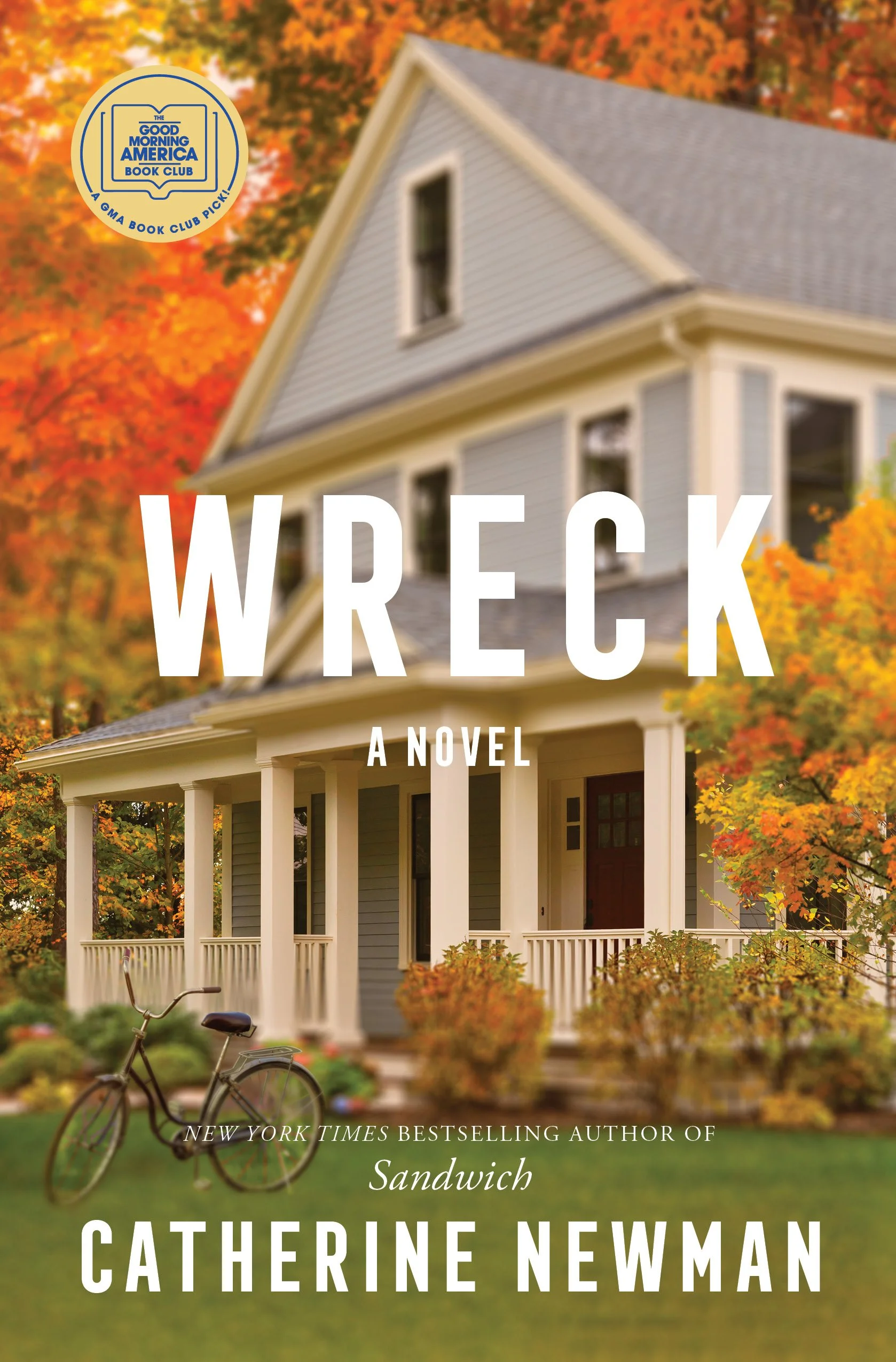
Wreck | Catherine Newman | Kindle | June 2026 | 224 Pages
Last weekend, the girls and I stopped by the local library. Avery was desperate for the next book in her fantasy series, and while she tracked it down in the stacks I chatted with Miss Babs, the greatest children’s librarian in the world (although, in my experience, all children’s librarians are angel people.)
Babs and I talked about how the English language needs some more specific words to describe reading experiences—like the feeling Avery described, of simultaneously wanting to devour her fantasy books to find out what happens and go slow and savor them so that they last longer. There should be a word for that! Babs added that there should be a word for when you finish a book and keep thinking about the main characters, wondering if they’re okay and what’s happened in their lives since that last page of the story. There really should be a word for that, too.
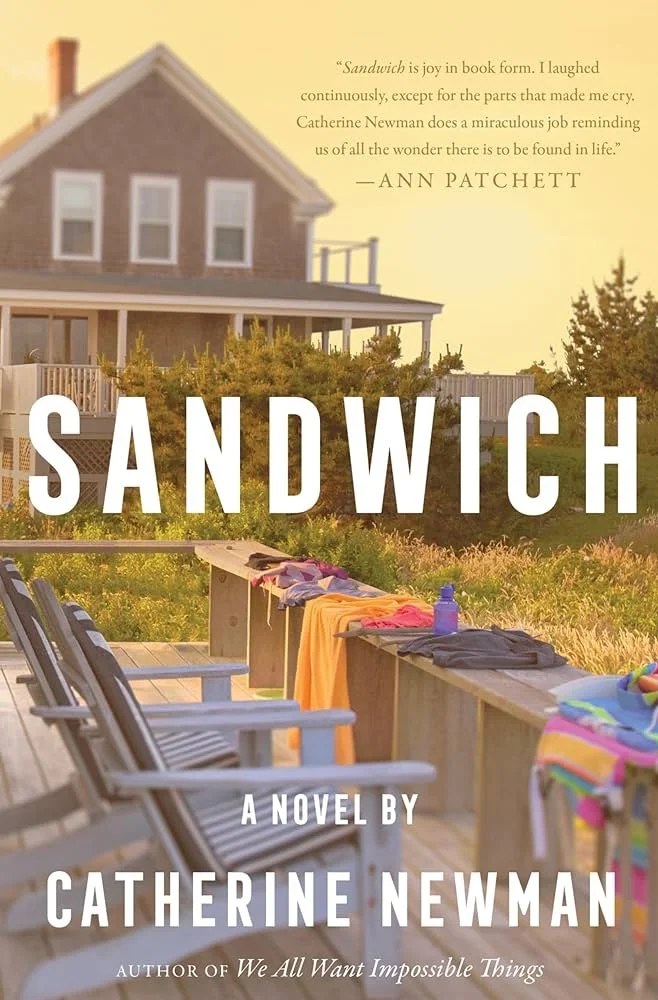
Because that’s precisely what I’ve felt ever since I finished Sandwich by Catherine Newman earlier this year. I waited for 14 long weeks to advance to the front of the library hold list and get my hands on Wreck, a chance to hang out more with Rocky and her family.
Wreck picks up a few years after where Sandwich ended. It is fall rather than summer. The family is at home in Western Massachusetts rather than on vacation on the Cape. Rocky’s mother has passed and her father is now living in the guest house behind the family’s main home. She’s balancing freelance writing with taking care of the family with navigating a slew of doctors appointments to identify and treat a strange and possibly cancerous rash that’s appeared on her body. Her husband Nick is working as a physical therapist and providing comic relief. Her queer young adult daughter is living and working at home, planning to launch at some point. Her young adult son is living in NYC with his wife, building a career in management consulting.
The arc of this story from Rocky’s world begins with the news that a local young man was fatally struck by a train while driving at night. He was a classmate of her son’s and Rocky becomes obsessed with the tragedy, even though her family has no direct connection to the crash. Or so she thought.
Meanwhile, she is on an anxious and mystifying medical quest to understand the diagnosis-defying rash that’s appeared on her aging body.
This story wasn’t as compelling to me as Sandwich, but I welcomed the chance to hang out with Rocky and her family once again. To hear her wry, anxious, and witty voice again. She is a mother overflowing with adoration for the people her children have become, while also endeavoring to treat them as adults with boundaries. I find her real, relatable, and fun. If there were another book from her perspective, I would read it. But I bet I’d still like Sandwich the best. Nothing like escaping to the land of sun, sand, and grilled fish with a squeeze of lemon.
I give Wreck 3.5⭐️’s.
May

Gift from the Sea | Anne Morrow Lindbergh | Hardback | May 2026 | 160 Pages
Gift from the Sea by Anne Morrow Lindbergh is an absolute jewel of a book. My adopted mother, the woman who stepped in after my own mother passed, pressed a copy into my hands one Mother’s Day, telling me what an important book it has been in her life. I had no idea how this tiny volume of essays would serve as a source of inspiration and reflection to me year after year.
Anne Morrow Lindbergh’s name might sound familiar—she was the wife of Charles Lindbergh, the first pilot to fly nonstop across the Atlantic in 1927. He was an American hero catapulted into fame, which led to the tragic kidnapping and murder of their first born son, Charles Jr., an event which garnered a hysteria of media attention.
As with so many women in history, Anne appears notable because of who was married to. But she was an accomplished woman in her own right—an award-winning pilot, Anne was the first American woman to earn a first-class glider pilot's license, and she played an important role in surveying transatlantic flight routes. She was also a writer, authoring many books, the most popular of which was Gift from the Sea. All while running a household and raising five more children.
Written on a solitary retreat to an island in Florida in 1955, Gift from the Sea takes the shape of a series of short essays. Each chapter is inspired by a particular shell she collected on the beach, its unique shape serving as a metaphor to explore some aspect of women’s lives—the demands of motherhood, the complexity of modern life, growing together in a marriage, and the call of one’s own self-care and self-expression amidst the demands of caregiving. Written over 70 years ago, its themes are as resonant and relevant as ever. I find that both immensely discouraging for the progress of women and immensely heartening—because Anne’s wisdom can buoy us (me) even today.
This was my third reading of this book, and each time I find myself drawn to new passages. Sometimes it is the ones on motherhood that hook me, and often I feel seen and validated by her take on creative expression, on writing itself.
On this reading, it was the passages on partnerhood that spoke to me. Probably because of the divorce. Probably because I am wondering how it is possible and what it even means to move through this life with someone else.
“But can one actually find oneself and someone else? In someone else’s love? Or even in the mirror someone else holds up for one? I believe that true identity is found, as Eckhart once said, by ‘going into one’s own ground and knowing oneself.’ It is found in creative activity springing from within. It is found, paradoxically, when one loses oneself. One must lose one’s life to find it. Woman can best find herself by losing herself in some kind of creative activity of her own. Here she will be able to refind her strength, the strength she needs…”
“She must find her true center alone. She must become whole.”
“We have so little faith in the ebb and flow of life, of love, of relationships. We leap at the flow of the tide and resist in terror its ebb. We are afraid it will never return. We insist on permanency, on duration, continuity; when the only continuity possible, in life as in love, is in growth, in fluidity ...”
Next time I read it, I will undoubtedly underline something else entirely. But I will undoubtedly read it again. And again. And gift copies to all the women I know.
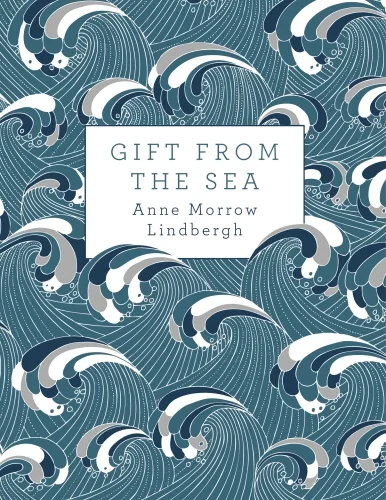
Though I already have a worn and underlined copy on my shelf, I picked up the UK edition on a trip through the Cotswolds last year—that first trip I took after divorce, away from my life and my children. I don’t think the US cover does the book justice, and this one with its bold waves called out to me at a darling little bookshop on a hill. Inside the pages are little wildflowers that I found in my travels that day—little gifts from the country, treasures collected as I became more and more myself.
I give Gift from the Sea 5⭐️’s.
Dogs, Boys, and Other Things I’ve Cried About | Isabel Klee | Audiobook (read by the author) | May 2026 | 288 Pages
I’ve been afraid of dogs my whole life. We had one until I was about six years old, when she passed from cancer, but I have few memories of her. A silly black lab mutt, Mica was a leftover from my dad’s bachelor days. My mom had an aversion/fear of animals, so all throughout my childhood she was really my dad’s dog and not the family’s.
I learned to distrust animals from my mother, and I always regarded them as something unpredictable and wild. If a friend had a dog, I would enter their house nervously, which (as the owners always reminded me) also made the dogs nervous. It was my fault, I guess. Maybe that’s why Amber Smith’s german shepherds attacked me when I was 15.
My fear carried into adulthood, to the little suburban neighborhood that I settled in, where people walked their dogs around the zig-zagging streets all day long. I planned my own walks to avoid streets with intimidating barks coming from yards and houses, and if I passed a dog on my walk, I’d cross the street and look the other way to avoid any confrontation.
It was after the loss of my mother and a miscarriage that my then husband, Ian, and I started talking about finding a little being to love. I was terrified, but curious. Dogs seemed like they could be a comfort in a bleak world. People talk about them as trusty and loving companions. In my efforts to heal from all the loss and grief, I watched YouTube yoga videos hosted by wise women with dogs by their side. I watched the dogs circle and settle in at the top of their yoga mats and let out a great sigh. Ian and I had love that we were longing to give to a second child, but no child would come. So we adopted Rosie.

Rosie
We found her on Craigslist, listed by a woman in her 20’s who was given the puppy as a gift. The woman both could not afford to keep her and was not allowed a pet in her apartment. There were so many irresponsible choices made in that chain, and we were happy to give Rosie a good home. We drove an hour and a half to meet her and see if it felt like a fit, which I understood as us “deciding whether we would take her,” but it was clear from the second that we stepped out of the car that she was coming home with us. A tiny, eight week old black and white terrier/beagle/poodle mix, she was the absolute cutest. And I was still scared of her.
She had a feisty, rascally puppy personality and teeth so sharp that she ripped through my pants and ankles. We had standoffs in the backyard. I hired a dog trainer and the formidable German woman showed up at my door, took charge, and taught me how to confidently pick up my dog. I got more comfortable with Rosie. I came to understand her. She was my dog. But other dogs were still foreign and unpredictable.
Some years down the road, my friends Allie and Chris began fostering dogs for Providence Animal Rescue League. We went to their house often for dinners and babysitting for my two girls (we finally welcomed a second one, and Allie was her nanny). I steered clear of the dogs at first, but watched Allie and Chris as they gently welcomed a revolving door of little creatures into their home, loving them so tenderly and compassionately, no matter how goofy or ugly or scraggly they were.
Before long, I was sitting in their living room armchair with two dogs in my lap, feeling their deep sighs as they curled their bodies into mine. I melted over time. By meeting so many dogs, sometimes the same ones for weeks at a time and sometimes just once before they were adopted, I started to understand what dogs are all about. I began to connect with them. I heard their heartbreaking backstories, and witnessed how they are hardwired to love and trust even when they’ve been through the most unimaginable experiences. And I started to believe that there really are no bad dogs, just scared and hurt ones.
Three weeks after Ian and I decided to divorce, the kids and I went on a weekend trip with Allie and Chris. The five of us piled into their Subaru Forrester, along with their forever dog, Helen the Chihuahua, and their most recent foster, Nora. Nora was a tiny little white and gray ball, a far too skinny and shaved shih tzu / beagle mix, with silly ears that stuck out like Dobby the House Elf. She was found on the side of the highway, matted and dirty. She climbed right into my lap in the middle back, where I was tucked in between my girls’ booster seats. And she sat there for the whole three hour drive.
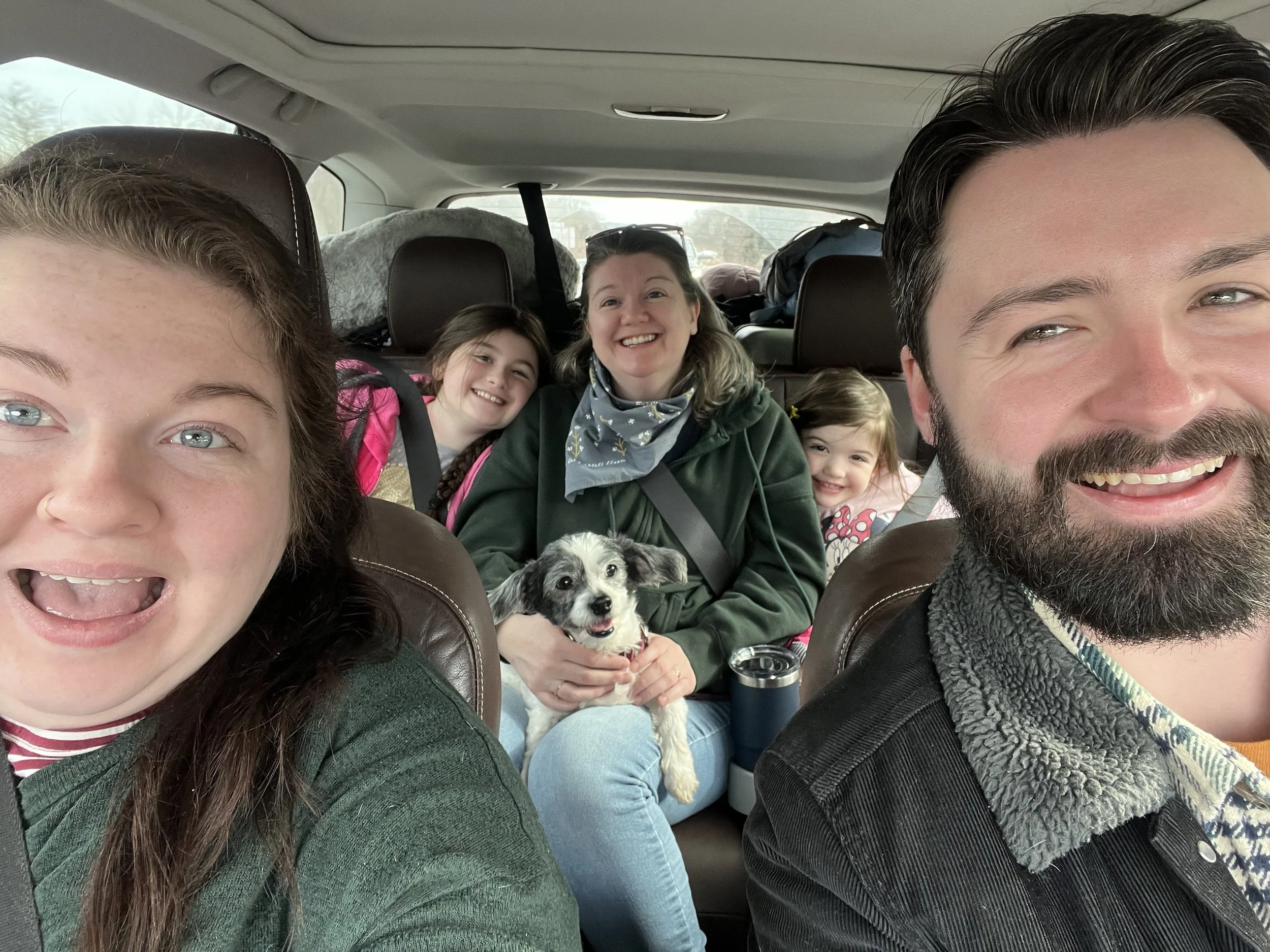
Nora
I looked into her round, brown eyes and saw a girl who had been through a lot and needed to heal. She was clearly a mother, maybe even very recently before the Animal Rescue took her in and spayed her. She was cute and small and scared but also sweet and brave. And it made absolutely no sense (logistically and financially), but right then and there I decided to adopt her. We were meant to be together. After the trip, she moved right in with us.
Nora was beside me as I slept on a fold out twin bed for the three months Ian and I were separated but still living together. She stared at me with her head tilted curiously as I packed his things into boxes. She curled into me on the couch when he moved out and the kids stayed at his new apartment, the house suddenly quiet. She fell into step with her sister Rosie, making me laugh as she learned to patrol the perimeter of our fenced in yard like a little terrier in training.
Somehow, I am now a woman with two doggies. I no longer cross the street when I see a dog coming my way—I’m far more likely to crouch down, offer my hand, and talk in a ridiculous baby voice about how sweet and precious they are. I trust them. I love them. I sleep in a king sized bed alone, but not really alone—Rosie is right there, always with her body pressed up against mine, and Nora lies on her own bed an arm’s length away, belly up with her little legs outstretched and snoring. So trusting, so loving. I love my dogs. And I love all dogs.
This is what I was thinking about as I listened to Isabel Klee’s new memoir, Dogs, Boys, and Other Things I’ve Cried About. Unlike me, Klee has been a dog lover from a young age, and even carved out a career working with dogs as an assistant to The Dogist. Her memoir traces the ups and downs of work and romantic relationships in her young adulthood in New York City, all in parallel with the sweet and brave dogs that she fostered along the way. My fellow book club member said, “This was a book about moving in and out of lots of apartments.” She was kidding, but it’s true—we follow Klee as she moves in and out with friends and boyfriends, all while learning about herself, healing from old wounds, and learning to be brave. And we watch as dogs (often with particular medical needs) move in with her, show what it looks like to heal and come back to life, and move on to their forever homes.
I found it sweet and relatable, even though Klee is of a different generation and we had a wildly different experience in our 20's (mine involved less travel, less boyfriends, less going out and drinking). When I learned that she is an influencer, my expectations for the book were not very high. But I was pleasantly surprised with her writing—she is, after all, the daughter of two writers and studied writing herself, not just someone with millions of followers who got a book deal. There’s depth and reflection here, about what it looks like to heal and truly become yourself.
I loved reading about the journey of each of the dogs she cared for, and appreciated how the focus of the book wasn’t on how to nurse a wounded dog back to life (putting the spotlight on Klee) but rather the bravery and spirit of the dogs themselves.
I’m here for all of the doggies, and the role that they can play in being the loves of our lives as relationships come and go.
My dogs have been here with me as I navigate divorce. I wouldn’t want to do this without them.
I give Dogs, Boys, and Other Things I’ve Cried About 4⭐️’s.
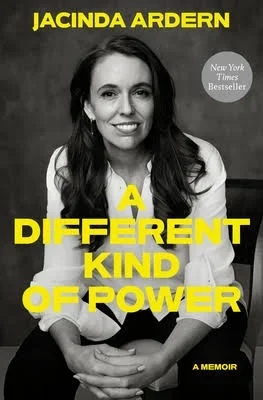
A Different Kind of Power | Jacinda Ardern | Audiobook (read by the author) | May 2026 | 352 Pages
In June 2005, I journeyed to the other side of the world. It took five airplanes and over 36 hours to get from Chester, Vermont to Dunedin, New Zealand, where I settled into a small flat with two kiwis and no insulation. That first night, I woke up with my toes frozen. I had to walk around the neighborhood for a half hour to help the blood flow back to my feet (June was the middle of winter there), stopping only at the corner dairy to purchase a phone card so I could let my parents know that I arrived safely.
I never thought that I would study abroad, but by the end of my sophomore year at Brown I was ready for a change of scenery, a break from the demanding and unrelenting Ivy League environment. I chose New Zealand because I wouldn’t need to learn a new language, because it was beautiful, and because it was the height of the Lord of the Rings films craze. It looked like a completely magical place, a pristine environment that called out to the Vermonter inside me.
That was more than 20 years ago—but I talk about my time there with such regularity, my friends are known to roll their eyes and tease me about it. Going to New Zealand is still one of the most interesting, most brave, and most exciting things I’ve ever done. I feel such a connection with that special place and its people.
So when my book club chose former New Zealand Prime Minister Jacinda Ardern’s memoir, A Different Kind of Power, I relished the opportunity to return there in my mind, and to let Ardern’s distinctive kiwi accent wash over me.
I listened to Ardern trace her political involvement from a humble childhood to an accidental election as a member of parliament to her two terms as Prime Minister. As a leader, she saw the country through extraordinary challenges—including the March 15th terrorist attack on a mosque in Christchurch, the 2019 volcano disaster on Whakaari / White Island, and the COVID 19 pandemic. Through it all, she showed up with a “different kind of power”—one centered on kindness, empathy, and compassion.
I took notice of her as a powerful leader who was also a mother, holding her baby on the floor of the UN. I watched the choices she made during COVID, striking a tone so different from US leaders. And I witnessed her decision to step down rather than overstay or overextend herself.
As a leadership coach, I especially loved the opportunity to learn about Ardern’s approach, which contrasts with the stereotypical authoritative, male, powerful, assertive politician.
“Here is what I would say to everyone who doesn’t fit the old mold: ‘If you have imposter syndrome, or question yourself, channel that. It will help you. You will read more, seek out advice, and humble yourself to situations that require humanity to be conquered. If you’re anxious, and overthink everything, if you can imagine the worst-case scenario always, channel that too. It will mean you are ready when the most challenging days arrive. And if you are thin-skinned and sensitive, if criticism cuts you in two, that is not weakness; it’s empathy. In fact, all of the traits that you believe are your flaws will come to be your strengths. The things you thought would cripple you will in fact make you stronger, make you better. They will give you a different kind of power, and make you a leader that this world, with all its turmoil, might just need.’”
I finished this book wanting to know more, wanting to follow Ardern’s story forward—as a leader, as a mother, as an activist, and as a human. But it is unfolding now. I have to settle for watching Prime Minister, a documentary filmed by her husband that is available on HBO, and preordering What If You Could, an adaptation of this memoir for a younger audience. I think my daughter will love it.
I give A Different Kind of Power 4⭐️’s.
The Paris Match | Kate Clayborn | Paperback | May 2026 | 464 Pages
Contemporary romance gets a bad wrap. The assumption that people (who don’t know better) make is that romance is surface-level, trite, cheesy, unrealistic, fanciful, and even gratuitous. They might roll their eyes, brushing them off as not “real” books. But there is so much romance out there that is meaningful, realistic, representative, relatable, and real.
Kate Clayborn writes characters that have true depth—they have rich inner lives, and as readers, we get to witness them develop in ways that are both nuanced and major. For example, in one of her books, the main character hangs a towel rack in her bathroom, and it is an act of significance in making a home for herself. I find that kind of everyday growth and bravery completely relatable, and Clayborn’s books are full of characters and moments like this.
The Paris Match has a bit of a grand premise: a divorced doctor (Layla) travels to Paris to attend her former sister-in-law’s weeklong wedding celebration. She keeps insisting that the divorce was amicable and she is fine seeing her former family, but she quietly pumps herself up with affirmations, tight control over her itinerary, and pre-planned outfits that will allow her to blend into the background. When the bride expresses that she is getting cold feet, Layla has to step up and take a larger role in getting the week on track. And that requires that she work together with the brooding, prickly best man (Griffin).
Contemporary romance and Kate Clayborn novels were a delicious escape for me in recent years, but after getting divorced myself I’ve steered away from the genre. It’s just not the right time for me. I made an exception for Clayborn’s newest release, but it made for a tough read. Not only is Layla smoothly over / hiding behind her “amicable” divorce, but her new love interest, Griff, suffers from anxiety to the point of being a recluse. Layla met him with openness, compassion, and understanding. I’ve just left a marriage with a man who struggled with similar demons, and, after 16 years, it was costing me too much.
The only quotation that I felt compelled to underline was: “Sometimes, she learned, you have to let your friends – your family – howl at the moon for you. Especially when you weren’t capable, at first, of doing it for yourself.” After all of that smoothing over, going along to get along in the divorce, it took friends speaking up on Layla’s behalf for her to really understand and grapple with the hurt of what she had been through in her marriage.
It was hard for me to get swept away by Layla and Griff’s mutual care and affection for each other—I was too worried about the consequences for Layla. I am in far too cynical a place for this particular book to hit right. For someone else, it absolutely will. But not me, not right now.
I give The Paris Match 3.5⭐️’s.
April
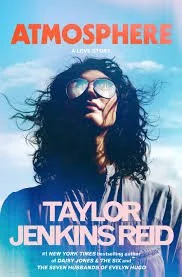
Atmosphere | Taylor Jenkins Reid | Kindle | April 2026 | 337 Pages
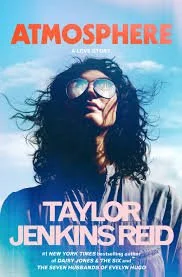
On April 1st, I watched as four astronauts blasted into the sky. I turned on the NASA Artemis II live stream and the kids and I ate dinner in front of the tv, following the sequence of checks and “go for launch” announcements. The kids had so many questions that I couldn’t answer. We just watched in awe as humans made their way beyond low earth orbit for the first time since 1972.
This was the background—or maybe even the foreground—to my experience reading Taylor Jenkins Reid’s Atmosphere. Reid’s books have soared in popularity over her past few releases, and I think with good reason. I read one of her earlier books and couldn’t recall the title or plot now. But they keep getting better and better. Malibu Rising was my favorite book in 2022, and I couldn’t believe how she made tennis matches so captivating through the written word in Carrie Soto is Back. The library wait list for Atmosphere was months long when it was released last year, but that led me to reading it at the best possible time.
Atmosphere tells the story of Joan, a fictional astronomy professor who earns a spot as an ASCAN (astronaut candidate) at NASA in the early 1980’s. Her class is one of the first to include women, and they are each intimately aware of how much is riding on their performance on the job—and how their ambition, sacrifices, and abilities might open or close the doors for all future female astronauts.
The story opens with Joan in mission control, communicating with four of her colleagues encountering a dire situation while orbiting in space. Joan keeps her cool, relaying information on behalf of the team at NASA and directing the crew with next steps. Then, we’re taken to the backstory of Joan and her team: how they came to know each other and form a fun, professional, and supportive community of belonging through their training. We meet sweet John, smitten Donna and Harry, intense Lydia, and mesmerizing Vanessa. Joan wonders at Donna and Harry as they become a couple, sure that she is simply not wired for that kind of romantic connection. Until she gets to know Vanessa.
This is a story about space, but it is also a story about love and belonging. Vanessa and Joan must hide their queer relationship, even as it grows to mean more than either of them expected. To earn security clearance, astronauts need to abide by a certain “moral code” that prohibits “sexual deviation,” as it might open them up to blackmail. Joan must communicate from mission control to Vanessa in the space capsule as though they are neutral colleagues, even as they both fear that they will never see each other again. Joan must also hide the true nature of their connection from her obnoxious and dominating sister, Barbara, and beloved niece, Frances.
I checked in on Joan and her colleagues nightly as I read before bed; I checked in on the Artemis II crew daily as their flight path took them to the dark side of the moon and back. On April 11th, they made their way back for splashdown. I was out to dinner, watching the livestream on my propped-up phone as they hurled through the atmosphere at Mach 32 speed. I held my breath through the six and a half minutes of communication blackout while a plasma sheath engulfed the spacecraft. I let out an involuntary “whoop!” when commander Reid Wiseman said, “Houston, we read you loud and clear,” the two sets of parachutes released as intended, and they touched down in the pacific ocean.
Just two days later, I finished Atmosphere, which culminates in a similar thrilling and tense reentry. And because I had just witnessed the real thing, the emotions of it all felt even stronger.
Atmosphere didn’t overtake my love of Malibu Rising and Carrie Soto is Back—they’re still at the top of my TJR list. But it was a fun and impeccably timed read, and I’ll look forward to her next release.
I give Atmosphere 3.5 ⭐️’s.
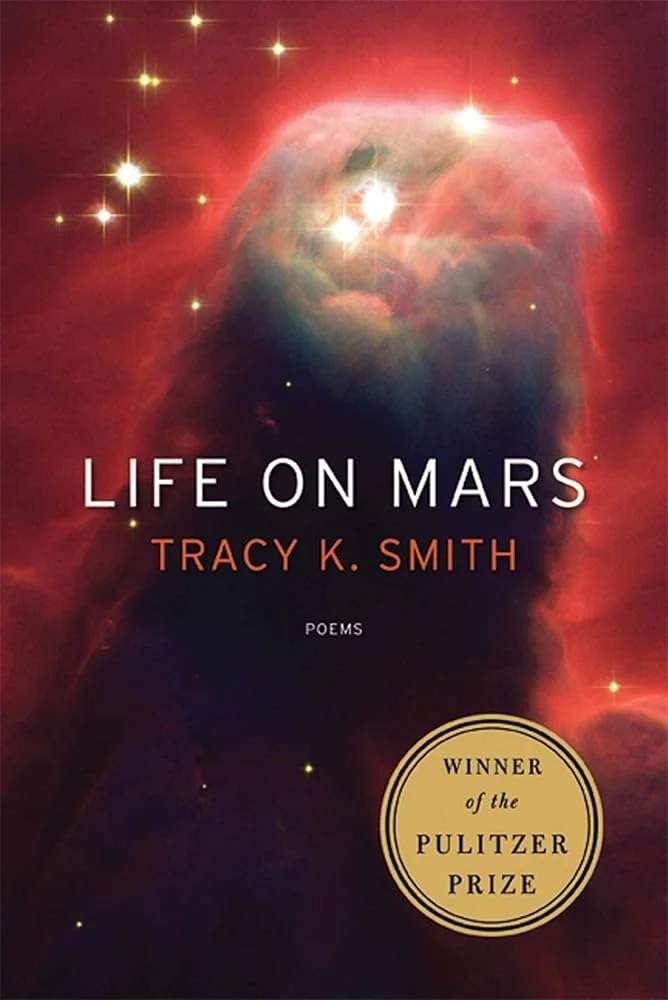
Life on Mars | Tracy K. Smith | Audiobook (read by the author) | April 2026 | 88 Pages
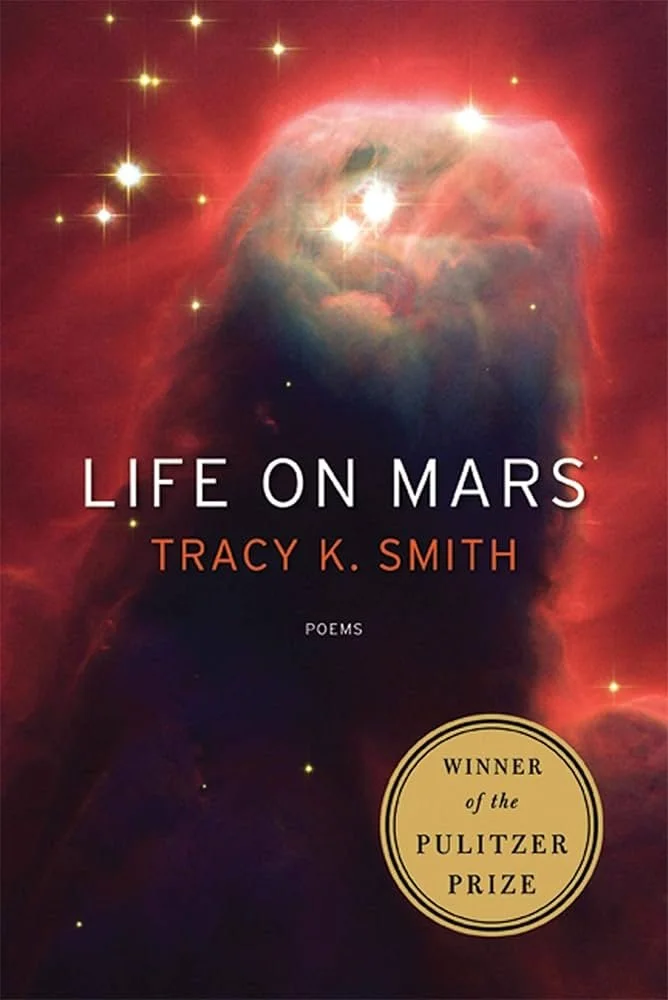
The month of April 2026 is all about outer space, it seems. With the Artemis II mission and reading Atmosphere by Taylor Jenkins Reid and finally seeing Project Hail Mary on the big screen. April is also poetry month, and I wanted to give a collection a try. So I found former US Poet Laureate Tracy K. Smith’s 2011 book, Life on Mars.
As an adult, I haven’t really connected with poetry. It’s funny—I went through a whole phase in high school of writing poem after poem. They poured out of me and into a series of black and white composition books. I competed in poetry slams in small town Vermont cafes. I even earned a spot on the Vermont Youth Poetry Slam team and traveled in a rented white van to the national competition in Ann Arbor, Michigan, performing on stages across the city. And then I stopped writing poetry altogether. I always thought that was ironic—the competition was called “Brave New Voices” and it was that weekend in Ann Arbor that I lost mine. Compared to the words of the other poets, mine felt small and silly. I felt like I had nothing important to say. I shrunk into myself.
Poetry slam is different from poetry on the page. As an adult, I’ve tried reading books of poetry, but I haven’t found something in the form that really speaks to me. I listened to Smith’s collection on audiobook, hoping that listening to the author’s rhythm and expression might draw me in. But mostly, it washed over me.
I wish I could say that I picked up on all the things that Smith talks about in the notes at the back of the book—the references to injustices and “current events” from 2011 that ring just as true in 2026—but I didn’t, really. Maybe poetry is something I should experience in a class, where I can learn about how to enjoy it. Maybe I resist it because a little part of me still feels sad about how it went from a thing that I loved, a thing that poured out of me, to a thing that wasn’t for me at all.
There was one poem that I found myself thinking about after:
It & Co.
We are a part of It. Not guests.
Is It us, or what contains us?
How can It be anything but an idea,
Something teetering on the spine
Of the number i? It is elegant
But coy. It avoids the blunt ends
Of our fingers as we point. We
Have gone looking for It everywhere:
In Bibles and bandwidth, blooming
Like a wound from the ocean floor.
Still, It resists the matter of false vs. real.
Unconvinced by our zeal, It is un-
Appeasable. It is like some novels:
Vast and unreadable.
I listened to this as Artemis II made its way around the dark side of the moon. And I thought about those astronauts, and all of us watching them, looking for It.
I give Life on Mars 2.5⭐️’s.
March
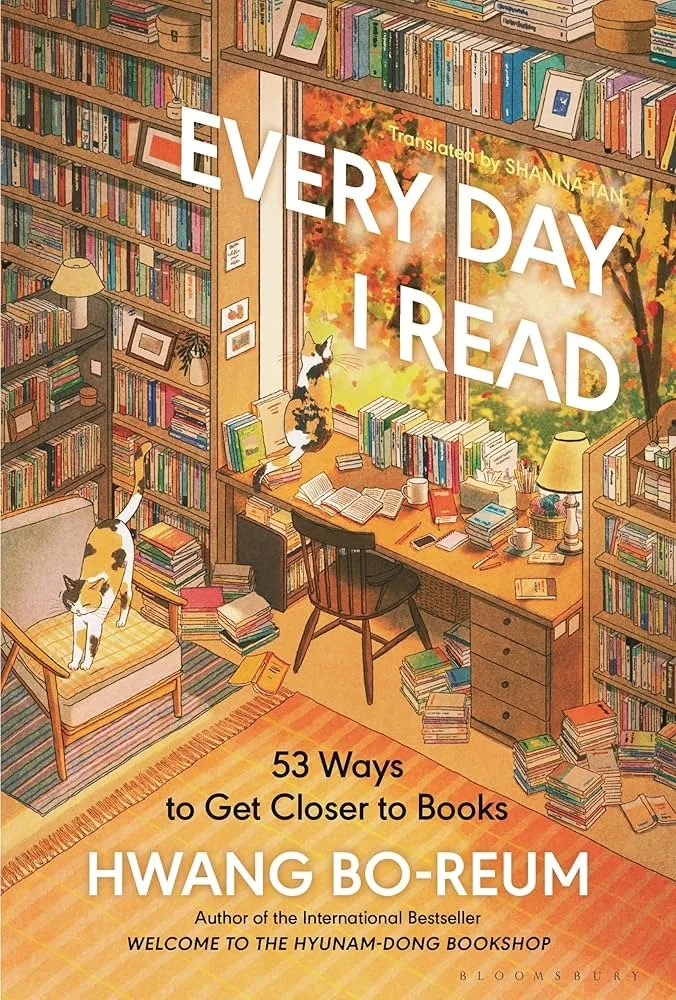
Every Day I Read: 53 Ways to Get Closer to Books | Hwang Bo-Reum, Shanna Tan (Translator) | Audiobook (read by Rosa Escoda) | March 2026 | 240 Pages
&
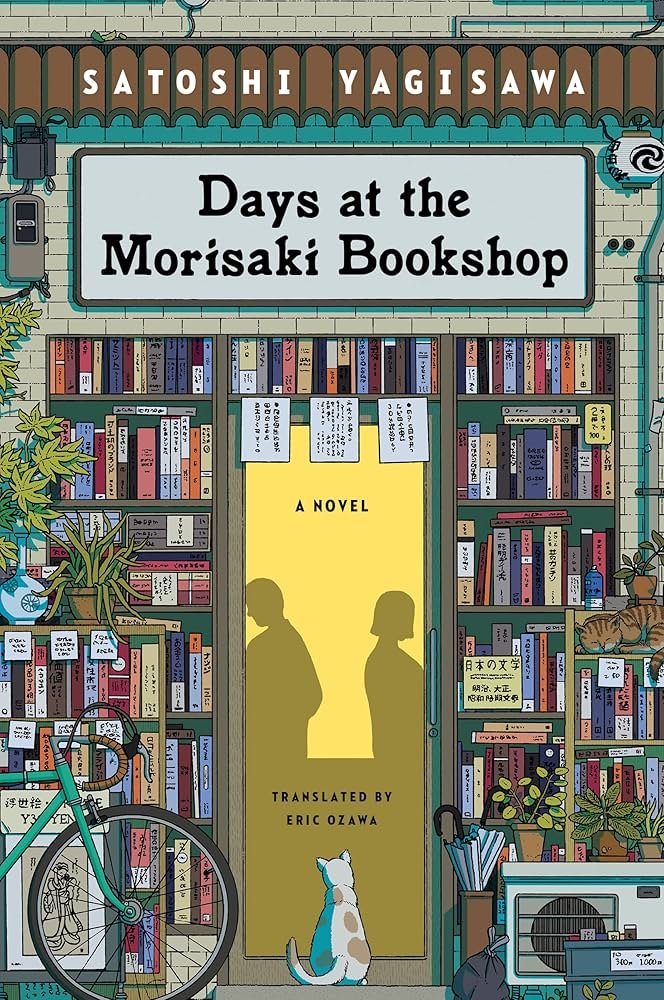
Days at the Morisaki Bookshop | Satoshi Yagisawa, Eric Ozawa (Translator) | Kindle | March 2026 | 170 Pages
One of the things I love most about being Autistic is the neurodivergent characteristic of deep interests. I learned recently (from a book, where else? The Neurodivergence Skills Workbook for Autism and ADHD) that these long-term fascinations are called “spins.” Spending time focused on your deep interest is time to be in your spin. “Collecting, researching, documenting, cataloguing, and organizing information or items that form part of your spins is inherently satisfying.” And oh boy, do I know the joy of letting myself spin in the things I love!
My spin over the last several years has been reading and books. It started with a quest to visit every independent bookstore in Rhode Island. Then it extended to hitting up every bookstore I could on my travels. Slowly and steadily, I’ve been building my home library of colorful and delightful reads, going so far as to download an app (Libib) that allows me to scan and track the books in my library through my own card catalog. Then came the installation of my Little Free Library, The Butterfly Book Swap, which stands cheerfully at the end of my driveway. I stamp each book with my customized stamp as it moves through the library and into the community. I tend to my library daily with great attention and intention.
This month, I read two books that allowed me to revel in my spin: Every Day I Read: 53 Ways to Get Closer to Books by Hwang Bo-Reum and Days at the Morisaki Bookshop by Satoshi Yagisawa. Both were short, digestible, and simple reads, and both were lovely celebrations of the joy of reading. And both also happened to be works in translation.
–
Every Day I Read is a collection of essays, each providing a way in, a way to shake up, or a way to deepen your reading practice.
Author Hwang Bo-Reum is remarkably well read, making connections between and drawing quotes from works in Korean, French, English, Japanese, and more. She is undoubtedly qualified to write this book. I was drawn in from the beginning, where she links a sailor in a poem from Edgar Allen Poe who holds on to a barrel in order to escape a whirlpool in the ocean with her experience of reading: “Just as how the seaman finds a barrel to save himself in the rough seas, I keep myself afloat with stories. Books may not solve all my problems, but at least they prevent me from sinking into the abyss.” I know exactly what she means.
With chapter titles like You Don’t Always Have to Finish It; Read Widely, Then Deeply; Always Have a Book With You (I do!); and Read Slowly, not every strategy will resonate with every person, but it’s such a beautiful buffet of options that there is something for everyone. Of all the ways that she offers, there were two that resonated most with me:
From #43: Write Book Reviews: “In his book, Learning to Write Begins With Reading a Book: A Writing Course, Lee [Kwonwoo] defines the reader’s response as such: The focus isn’t on the book, but on the reader and on your experience reading it. It’s not stressful or challenging to write. Writing is about giving shape to our thoughts and feelings, and through the process, better understanding ourselves. Writing a reader’s response is a way of reflecting on our personal experiences through a book. And as we write down our thoughts, they gain form, logic, and persuasion. Now, I don’t only read to understand—I read to write.” That’s what I’m doing here—writing reader’s responses to each book I read in 2026. I have a name for it now.
From #51: Read books that preserve your sense of self: “And that’s why I read: to collect stories that will help me be myself.” Every book I read helps me to understand myself more deeply—and cultivate more empathy and understanding of others.
To say that I “finished” this book is misleading—because it is one that I will read again and again. The audiobook was not sufficient. I’ll need to find a copy to keep on my bedside table, so I can revel in it even more. And more copies to give to my friends who, like me, adore reading.
I give Every Day I Read 4⭐️’s.
–
“The Morisaki Bookshop stands alone at the corner of a street crowded with used bookstores. It’s tiny and old and really nothing much to look at. There aren’t many customers. And because it has a limited selection, people who aren’t interested in its specialty never give it a second glance. But there are people who love this store. And as long as they’re devoted to it, then that’s enough. That’s what my uncle Satoru, the shop’s owner, always says with a smile. And I agree. Because I love the bookshop and its owner.”
Days at the Morisaki Bookshop is a work of fiction. It tells the story of Takako, a young woman who recently lost her (shitty and duplicitous) boyfriend and job (he was her coworker and she could no longer face him). Takako crash lands at her sweet uncle Satoru’s used bookshop, where she works by day and boards in a room upstairs by night. Living in a bookstore is the stuff of dreams for me—what better place to recover from burnout—but it doesn’t feel that way at first to Takako. She is exhausted. She is not much of a reader. And though she and her uncle were close when she was a child, they haven't connected in a long time. Takako spends much of her time sleeping, feeling like a failure, and just surviving the days.
Sitting with him in the shop, Takako tells her uncle: “‘I don’t know. I think maybe I’ve been wasting my time, just doing nothing.’
‘I don’t think so. It’s important to stand still sometimes. Think of it as a little rest in the long journey of your life. This is your harbor. And your boat is just dropping anchor here for a little while. And after you’re well rested, you can set sail again.’
‘You’re saying that now, but then you complain when I’m sleeping,’ I said spitefully.
He laughed. ‘Human beings are full of contradictions.’”
We all face times in life when we need a safe harbor. If only we all had a supportive uncle to offer us a place to drop anchor and rest.
Takako’s role in the bookshop connects her with a cast of characters from the community, including her estranged aunt who suddenly returns to Satoru’s side, and we slowly watch Takako open up. She begins to heal, to weave her life together with new friends, to stand up for herself, and, of course, to read.
It was the translator’s note at the end of the book that I finally underlined. He says of the author, Yagisawa: “In the course of the story, he catalogs the many pleasures of reading: the joy of discovering a new author; the hedonism of staying up too late to finish a book; the surreptitious thrill of getting to know someone by reading their favorite novel; and the freedom of walking into a bookstore and scanning the titles, waiting for something to catch your eye.”
I know all of these joys intimately. And it was a joy to read a simple story that centered on the pleasure of reading.
I give Days at the Morisaki Bookshop 3.5 ⭐️’s.
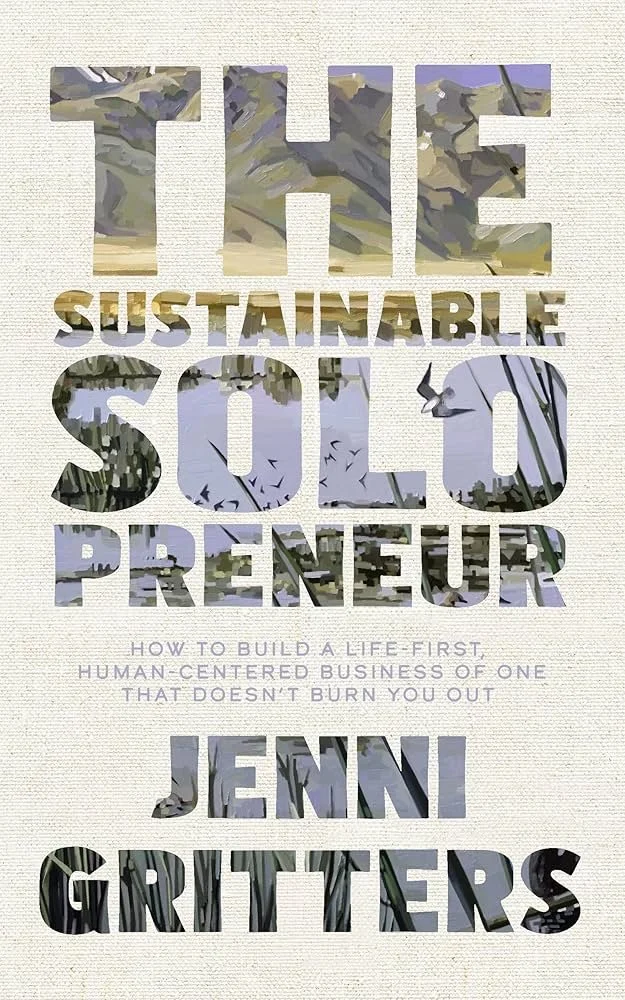
The Sustainable Solopreneur: How to build a life-first, human-centered business of one that doesn't burn you out | Jenni Gritters | Kindle | March 2026 | 130 Pages
“The ladder of more, more, more often turns out to be leaning against a wall that we never actually wanted to climb.”
When I stepped off the ladder of traditional work and into entrepreneurship, I felt relief at leaving the climbing behind. After ascending up through five job titles over the course of seven years to a role that looked highly successful on paper but regularly left me awake at 2am in tears, I was burnt out and disillusioned. I didn’t want to climb anymore.
While the world of entrepreneurship was a welcome reprieve, I soon learned that owning your own business doesn’t make you immune to the pressures to climb. The messages online and in local business development programs are clear: A “successful” business means MORE! More clients, more revenue, more visibility year over year! More staff as you scale and grow! More, more, more!
Finding entrepreneurial thinkers who talk about growing better, not bigger, has been more challenging than I expected. I’ve read and reread Paul Jarvis’ Company of One, just to remind myself that the point of having my own business is to have a better life, not a bigger life.
So when I heard about business coach Jenni Gritters’ self published book, The Sustainable Solopreneur, I recognized a message that I’m eager to hear more often: create a business that is sustainable for you.
Based on her own experience and her work with clients, Gritters shares five core principles of sustainable solopreneurs:
Take time to make intentional decisions
See self-awareness as essential to business growth
Operate on a flexible, cyclical basis
Rely on creativity in times of change
Build with reciprocity in mind
While I agreed with many of the ideas Gritters shares, there are parts of this book that didn’t resonate—mostly, the writing. Gritters leans on a central analogy of the wetlands behind her childhood home, drawing connections between the natural rhythms of a sustainable ecosystem and a sustainable business. At times, her language wanders into an earthy space that I couldn’t relate to. (“You are made of stardust, earth, water, wind, and fire;” “The sustainable solopreneur knows that she is alive for a purpose but she’s in no rush to get anywhere other than here, feet in the mud, hands full of wildflowers, singing at the top of her lungs.”) I’m also not interested in following her lead to plan my business activities around the phases of my menstrual cycle.
In the conclusion, Gritters shares “I wrote this book in the course of five weeks” which I find both impressive and unfortunate. It reminded me that this book is, at its heart, a self-published marketing piece to learn more about Gritters and her approach as a way of capturing new clients, not necessarily a nonfiction book focused on authentically guiding solopreneurs. If it were, I hope an editor would have helped Gritters to make the book less about her own story and more about the reader creating their own, and to rely less on definitions as an opening of each concept: ex. Sustainability is defined as ….”
What was most useful to me in reading this book was the prompt to consider what principles I would deem core to sustainable entrepreneurship.
Sustainable Solopreneurs:
➡️ Grant themselves permission to design their own work.
Define success for myself.
I can create my own hours and workflow—it’s okay to watch Top Chef at 2pm on a Wednesday.
Working doesn’t have to be hard.
There are many types of business models. Find one that fits and use it as a springboard to design my own.
➡️ Allow the business to unfold organically.
I don’t pound the pavement, make cold calls, or “market” myself on social media.
Marketing is about sharing my authentic expression and inviting people in. Nobody is going to come to a party I don’t invite them to, so I need to keep sharing the invitation.
➡️ Evolve the business to follow my needs and interests—as well as the market.
Diversify income streams so everything isn’t resting on just one service. The market and client needs swing over time, and an adaptable business can swing with it.
Allow space to follow my interests, let the business evolve in that direction so I can take on new challenges and learning, keep it fresh.
➡️ Build a sense of stability and safety for themselves.
Align the business with my nervous system.
Owning a business can provide more stability than working for someone else—I trust myself to create opportunities for myself.
➡️ Connect with a supportive community.
Get a business buddy and business mentors—just because you work for yourself doesn’t mean you have to work by yourself (Paul Jarvis).
Outside perspective can help uncover blind spots and opportunities I wouldn’t otherwise see, and unlock the permission that I need to do things my way.
Given five weeks to work on this, I’d synthesize these rough ideas a bit more. And likely they’d emerge as something close to Gritters’ principles of Intention, Self-Awareness, Flexibility, Creativity, and Reciprocity. Indeed, there were several passages I underlined that I identified with wholeheartedly through my own experience:
“It took time, dedication, and low pressure environments to grow something truly aligned.”
“Whenever someone asks me if my work is recession-proof, I laugh and say: ‘My brain and my expression are recession proof!’ By which I mean: My ability to come up with new ideas and create new realities is something I trust deeply. I am rarely scared of what comes next because I trust that I can adapt and respond, rather than react, no matter what comes. And the permission I’ve given myself to grow and evolve will never, ever disappear.”
While The Sustainable Solopreneur isn’t a book that I’ll revisit again, I’m glad it exists. I’m glad even just the title phrase exists. I want to hear more messages like this one—I want to hear more from business owners who look at their work lives as an opportunity to design a good life rather than a “scalable business” (barf!). Perhaps I’ll write more on this topic myself.
Because working for myself has been life-changing for me. Only because it’s given me a pathway to create my own life. As Gritters writes, “We can push back against the lie that running a business has to be something that requires suffering, challenge, and constant hustle, too. We can rewrite the story that your business has to take over your whole life, that success looks a certain way, and that extractive practices are the only way to survive.”
I give The Sustainable Solopreneur 3.5⭐️’s.
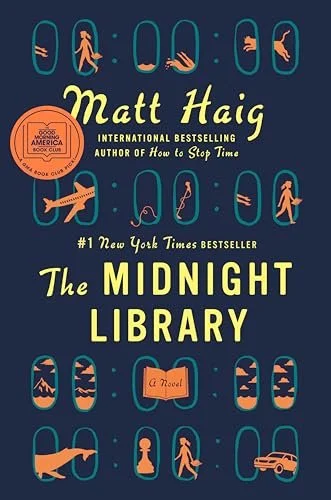
The Midnight Library | Matt Haig | Paperback | March 2026 | 288 Pages
Matt Haig’s book, The Midnight Library, has taken up what seems like permanent residence on my local independent bookstore’s “Top Fiction” display shelf. Want to borrow it from the library? Forget about it! The book came out six years ago, and the wait for an e-book is still many weeks. That tells you something—that it must be a good one. A sure thing.
That’s what I thought when I picked up a used copy and moved it to the “on deck” position on my nightstand. I thought it would be a homerun for me. A story that revolves around a library and books? This stuff is my catnip!
But I’m sorry to say this one fell flat for me. It was…fine. Perhaps it was too hyped up. Perhaps it was a male author writing from a female main character’s perspective which I find obnoxious in this patriarchal world. Perhaps it’s just too, well, cheesy.
The Midnight Library tells the story of Nora, a 30ish year old woman who is unhappy with her life. There are so many things she could have been or could have done if she had only made different choices. One night, she decides to take her own life by ingesting a bottle of pills. Instead of dying, she finds herself in an in-between place: a library conjured just for her. The stacks are filled with books and books that tell the stories of all the different lives she could have lived if she could correct her regrets, and it is staffed by Mrs. Elm, the beloved librarian from her youth. Nora experiences different lives—if she had kept swimming and made it to the Olympics, if she had studied glaciers (her childhood dream), if she had stayed in that band and become a global sensation, if she had asked that guy to coffee. As she embodies each life, she learns about the limits of her regrets and what is truly important to live a good life.
One blurb on the back cover calls it “an It’s a Wonderful Life for the modern age,” which I suspect is why it has resonated with so many. It’s an easy story to take in, with a redeeming and hopeful ending that champions connection and community and love. Shocker! Nora discovers that the point of it all is love: “Nora felt something inside her all at once. A kind of fear, as real as the fear she had felt once on the Arctic skerry, face to face with the polar bear. A fear of what she was feeling. Love. You could eat in the finest restaurants, you could partake in every sensual pleasure, you could sing on stage in Sao Paulo to twenty thousand people, you could soak up whole thunderstorms of applause, you could travel to the ends of the Earth, you could be followed my millions on the internet, you could win Olympic medals, but this was all meaningless without love.”
I mean, yes, it’s true! But it’s so trite and obvious. So predictable. Like a Hallmark movie. I was a contemporary romance addict for years, feeding off of predictable happy endings, so I know there is a value and a place for stories like this. And I’m just not in that place right now.
I give The Midnight Library 3⭐️’s.
The Correspondent | Virginia Evans | Audiobook (read by full cast) | March 2026 | 304 Pages
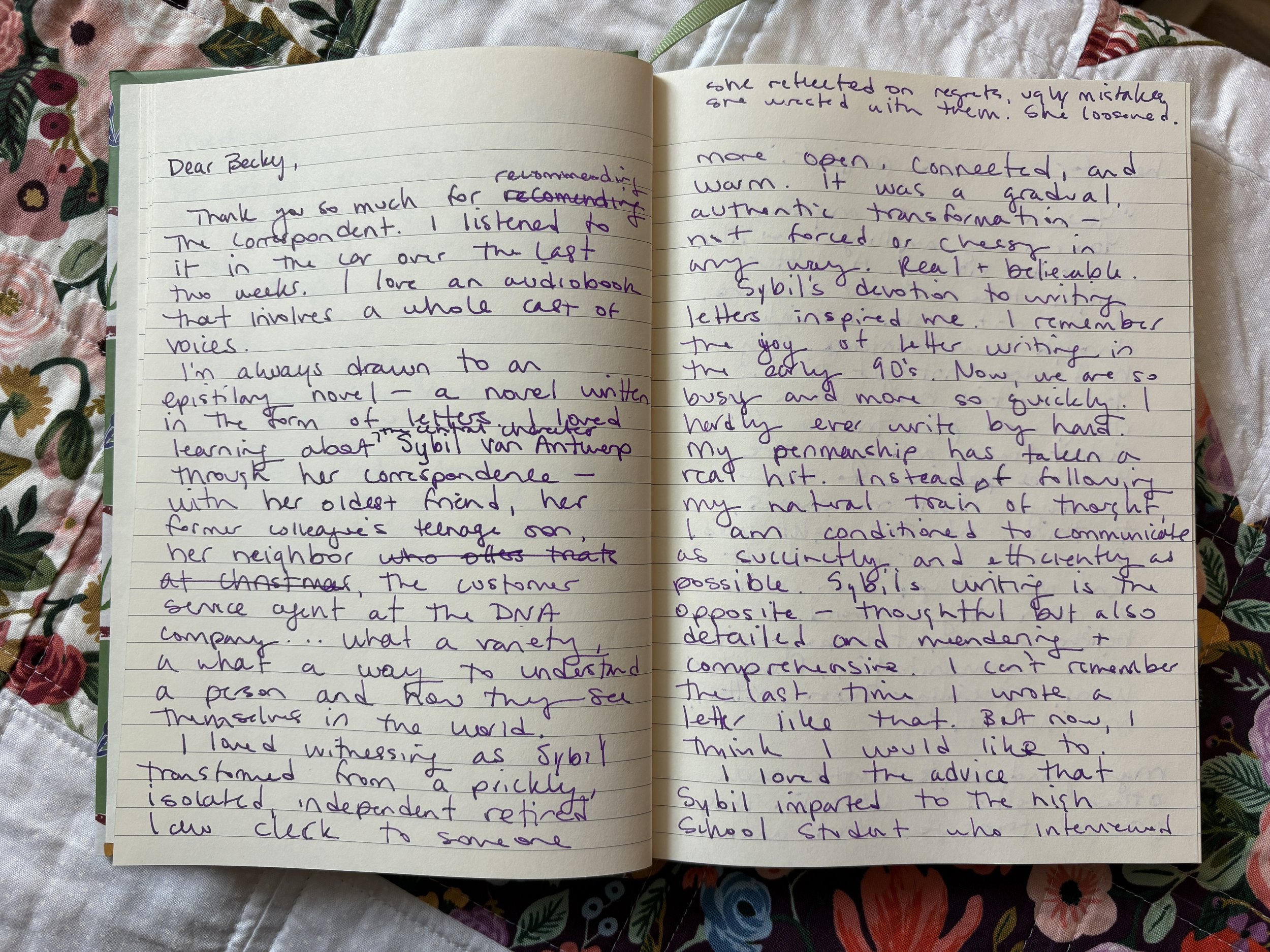
Dear Becky,
Thank you so much for recommending The Correspondent. I listened to it in the car over the last two weeks. I love an audiobook that involves a whole cast of voices.
I’m always drawn to an epistolary novel—a novel written in the form of letters. I loved learning about the central character, Sybil Van Antwerp, through her correspondence with her oldest friend, her former colleague’s teenage son, her neighbor down the street, the customer service agent at the DNA company…what a variety, a way to understand a person and how they see themselves in the world.
I loved witnessing as Sybil transformed from a prickly, isolated, independent, retired law clerk to someone more open, warm, and connected. It was a graduation, authentic transformation—not forced or cheesy in any way. Real and believable. She reflected on regrets, ugly mistakes. She wrestled with them. She loosened.
Sybil’s devotion to writing letters inspired me. I remember the joy of letter writing as a kid in the early 90’s. Now, we are so busy and we move so quickly. I hardly ever write by hand, and my penmanship has taken a real hit. Instead of following my natural train of thought, I am conditioned to communicate as succinctly and efficiently as possible. To not waste someone’s time. Sybil’s writing is the opposite—thoughtful, but also detailed and meandering and comprehensive. I can’t remember the last time I wrote a letter like that. But now, I think I would like to.
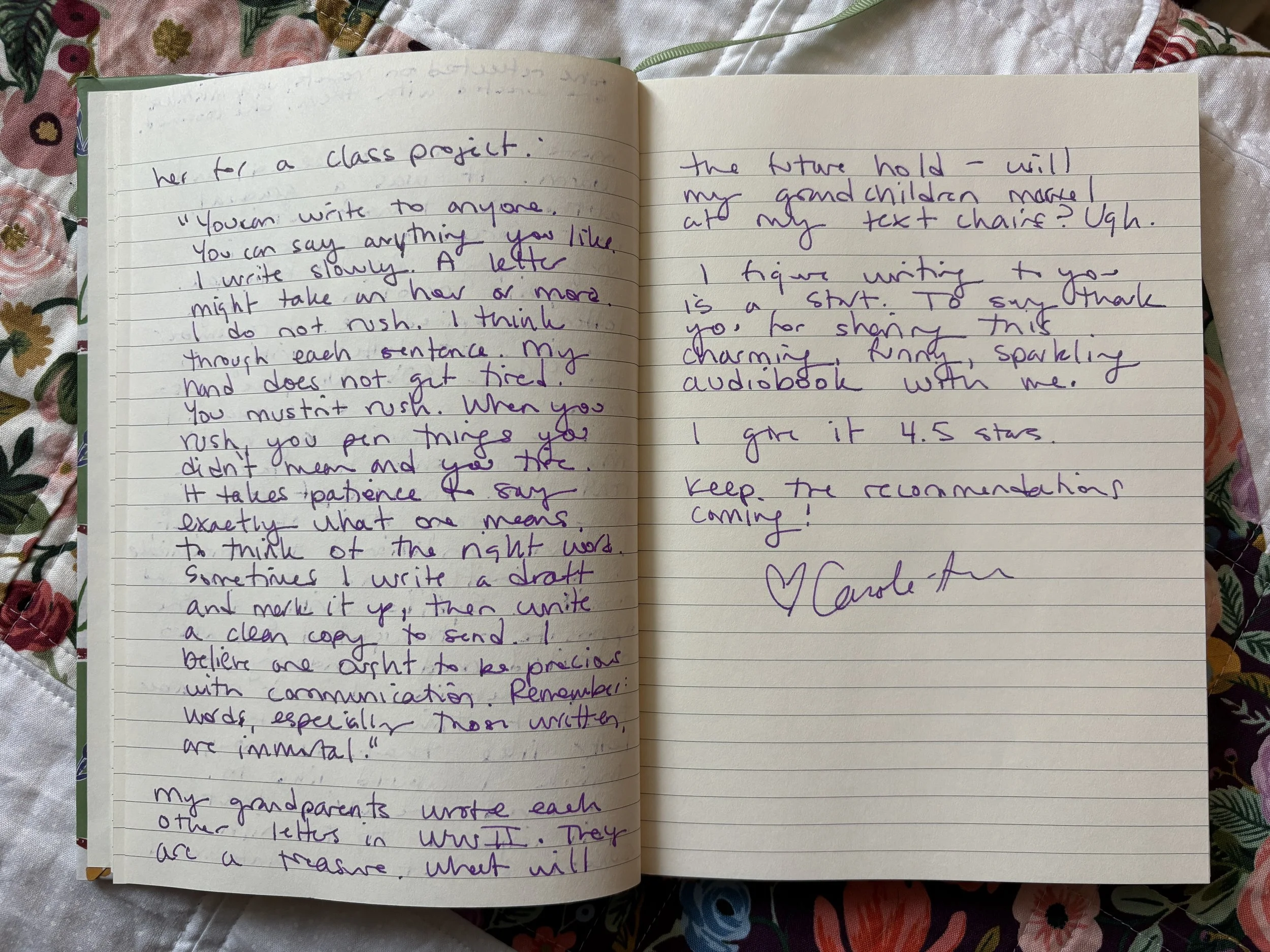
I loved the advice that Sybil imparted to the high school student who interviewed her for a class project:
“You can write to anyone. You can say anything you like. I write slowly. A letter might take me an hour or more. I do not rush. I think through each sentence. My hand does not get tired. You mustn’t rush. When you rush, you pen things you didn’t mean and you tire. It takes patience to say exactly what one means, to think of the right word. Sometimes I write a draft and mark it up, then write a clean copy to send. I believe one ought to be precious with communication. Remember: words, especially those written, are immortal.”
My grandparents wrote each other letters during World War II. They are a treasure. What will the future hold? Will my grandchildren marvel at my text chains? UGH.
I figure writing to you is a good start. To say thank you for sharing this charming, funny, sparkling audiobook with me.
I give The Correspondent 4.5⭐️’s.
Keep the recommendations coming!
Carole-Ann
PS - Have you ever considered writing to an author like Sybil writes to Joan Didion? I hadn’t! Why in the world would an author care to hear what I have to say about their book? But maybe they do. Or maybe it doesn’t matter if they do, more that I give myself the chance to share my thoughts, connect, express thanks. Hm.
February
How to Keep House While Drowning | KC Davis | Hardcover | February 2026 | 160 Pages
Like many women across the globe, I started folding my underwear in thirds by the KonMari Method sometime in the late 2010’s. I aspired to the crisp organization and joy Marie Kondo insisted would emanate from a tidy home. But with a four year old and another on the way, aspiring felt less inspirational and more shameful.
This book is the opposite of that.
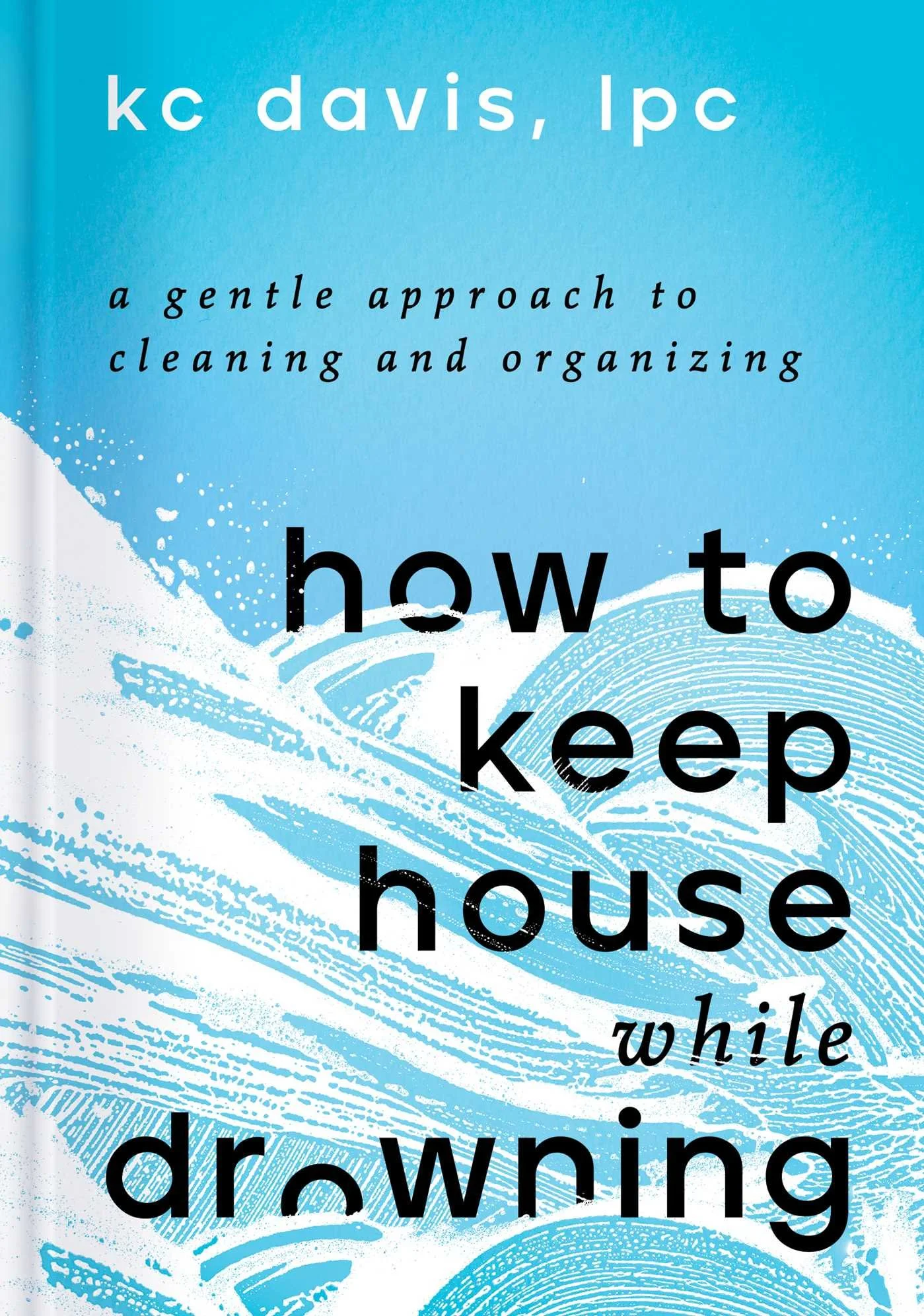
In How to Keep House While Drowning: A Gentle Approach to Cleaning and Organizing, therapist KC Davis describes being a tired, depressed, overwhelmed mom of two when the pandemic hit—and refusing to accept that failing to keep her home tidy meant that she was lazy. She was anything but.
Davis presents a reframe that takes the moral judgement out of cleaning: instead of thinking of household tasks as “chores,” they are “care tasks.” Chores are obligations. Care tasks are kindnesses to self. And the point is not caring for your home. The point is making your home functional so that it can care for you.
“Care tasks are morally neutral. Being good or bad at them has nothing to do with being a good person, parent, man, woman, spouse, friend. Literally nothing. You are not a failure because you can’t keep up with laundry. Laundry is morally neutral.” Reading that felt revolutionary after spending my whole life in a culture steeped in judgement around the state of my home—especially as a woman and as a mom. And yet, it felt so clear and true. This simple reframe freed me.
Davis begins her book with a note that I’ve never seen in any book before: “This book has been designed for maximum accessibility for readers who are neurodivergent.” She goes on to explain the careful consideration given to the typeface, bolded key ideas, short paragraphs, literal interpretations of metaphors, and a pathway for reading an abridged version of the book. It made me feel so welcome from the first page. Davis herself was diagnosed with ADHD only in the last few years, and the strategies she offers are practical and accessible for people who are neurodivergent or deal with chronic illness. But—let’s face it—they’re also relevant to all humans just trying to make it through the day in this overwhelming, messy world.
So often, I find myself wandering from room to room in my home, putting this back there, and seeing that needs to go over there, and on and on and on for hours. I am overwhelmed and exhausted by being a single mother of two—keeping up with the papers from school, the endless laundry, the dishes in the sink, the half-finished art projects. I am not so concerned with my house looking good for others. Rather, because of my Autism, clutter and mess around the room registers in my brain as noise. Trying to function in my living room when I can see toys strewn everywhere is the equivalent of 50 people trying to talk to me at once. I need to clear the noise in order to be present, to guard my capacity so it is available for work and my children. It can feel like a never-ending battle.
Davis’ strategies help. Her “five things tidying method” helps my brain tame the overwhelm and make progress. Her skills for kick-starting motivation work for me. I am cleaning in small, gentle bursts. But more so, it is the generous permission that she gives that I am taking away from this short and lovely book—permission to not fold my children’s clothes before putting them in their drawers, permission to embrace adaptive imperfection (do it good enough, in a way that makes my world functional), permission to use tools that make cleaning more accessible and realistic for me.
And then there is her short chapter on strategies for keeping your car clean: “I dunno, friends,” she writes. “My car looks like shit. I don’t have this one figured out. I may never have this one figured out. That’s okay too. I honestly stopped putting much effort into trying. This journey isn’t about some mythical destination where everything has the perfect system; it’s about permission to make things functional and permission to enjoy your life even if your car never gets clean.”
That’s real. That’s relatable. And that’s the voice I needed in my life, as an Autistic single mom of two trying to move through a very demanding world that wasn’t built for me. I will recommend this book to everyone.
I give How to Keep House While Drowning 4.5⭐️’s.
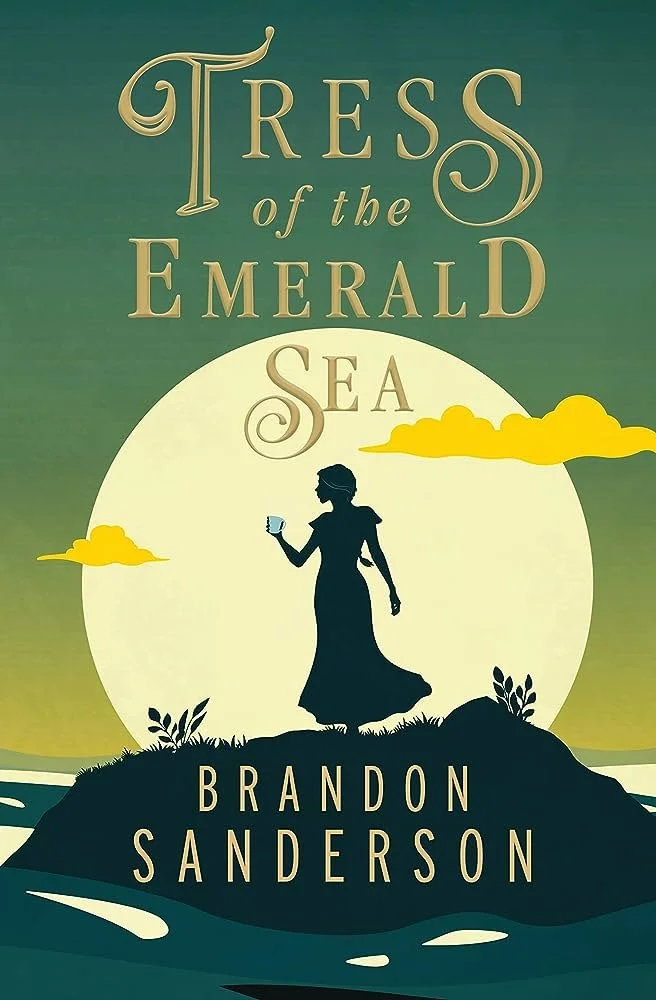
Tress of the Emerald Sea | Brandon Sanderson | Kindle | February 2026 | 486 Pages
Last month, at my 40th party, I asked my friends to come prepared with a slideshow presentation about which fictional character they would choose as their best friend and why. I’d seen this kind of thing on social media, and it was a bit of a risk to give people “homework” for a party, but it turned out to be such a delight.
Courtney regaled us with a detailed and witty outline of why she and Lizzie Bennet of Pride and Prejudice would make quite the pair. Angelica made the case for Kate Sharma from Bridgerton. Erin chose Olivia Benson from SVU (and as each slide transitioned, we heard the sound clip of the famous Law & Order “dah-dunnnn”).
Rachel brought a character that none of us knew—Tress of the Emerald Sea, from a fantasy book by Brandon Sanderson. I’ve never read one of Sanderson’s books, but I’ve hauled them to three separate residences (he was one of my ex-husband’s favorites) and at 1000+ pages a pop, that was no small feat. Rachel told us about the book’s unassuming main character, a young woman nicknamed Tress, who sets off on a dangerous adventure out of necessity. It is a typical hero’s journey, but it’s not often enough that we get to see it undertaken by a heroine.
In the afterward of the book, I learned that Sanderson’s prompt for the book was: What if Buttercup from The Princess Bride had gone searching for Westley, instead of immediately giving him up for dead? It’s a fun premise.
Tress finds herself on a pirate ship, headed into dangerous seas. The oceans in her world are not made up of water—they’re made of undulating spores that are lethal to humans. There is someone she must rescue and a curse she must break. I rolled my eyes a bit. I think pirates and magic and dragons are simply not for me. But I’m glad that I ventured out into a different genre.
Perhaps it is also male authors who are not for me. Of the 45 books I read last year, only eight were written by male authors, and just three of those were fiction. In general, I am tired of living in a world of men’s stories and perspectives. I am looking for an escape from this patriarchal world.
The most endearing detail about Tress as a character is that she is a collector of cups. She appreciates all different kinds of cups—made of different materials, with different designs: “Tress cherished her cups. She had fine porcelain cups with painted glaze, clay cups that felt rough beneath her fingers, and wooden cups that were rugged and well-used.” She especially likes the ones that are worn with chips or cracks.
In the months leading up to my 40th birthday, I scoured thrift stores for unique mugs. I wanted to collect all different colors and sizes so that each person who came to my party could choose one that suited them and sip tea or coffee from it throughout the cozy gathering. When the weekend finally came, I laid each mug out on the table with a book and a handmade reading pillow. Each guest got to pick their favorites. And then at the end of the weekend, Rachel told us all about Tress and her cups.
It’s not the pirates or the writing or the magic or the adventure that I’ll remember about this story. It’s the cups. And when I think of them, I’ll smile.
I give Tress of the Emerald Sea 3.5⭐️’s.
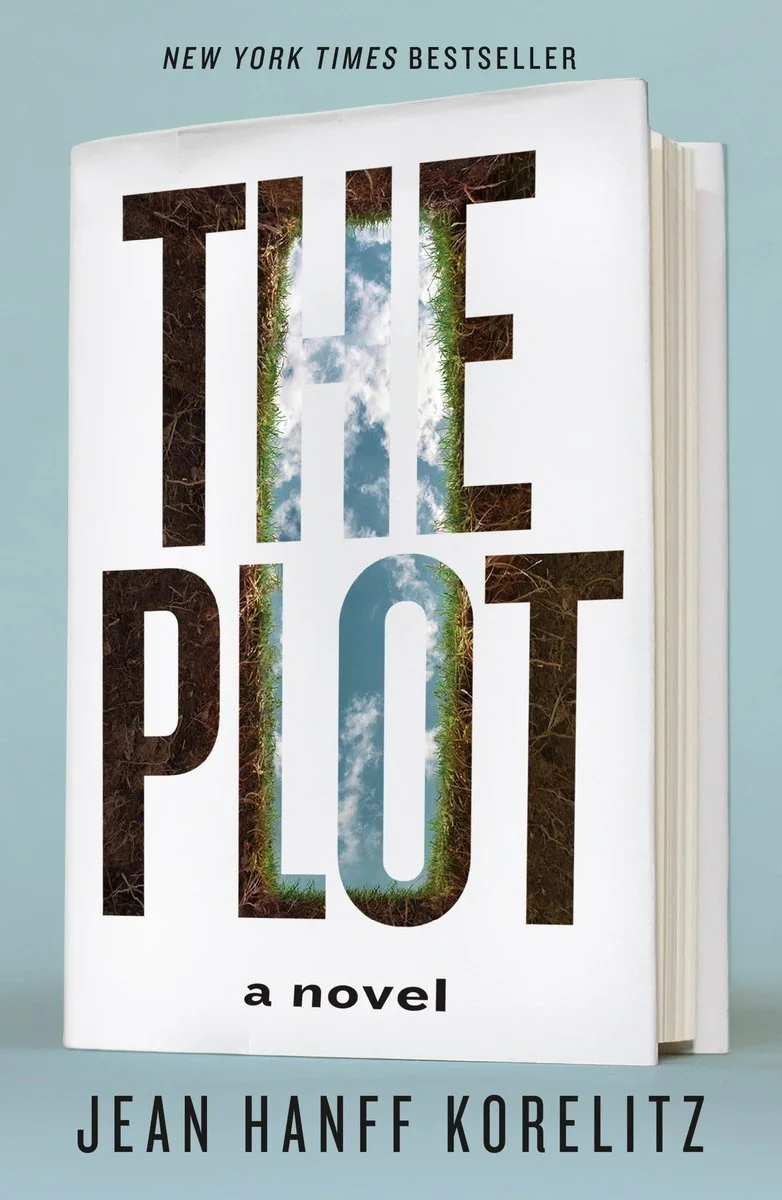
The Plot | Jean Hanff Korelitz | Kindle | February 2026 | 317 Pages
I’m continuing my tour of new genres, things I never would have read when I was forehead deep in contemporary romance. The Plot, a suspense novel by Jean Hanff Korelitz, was a twisty foray into the world of publishing. When Jacob Finch Bonner, a mediocre author / creative writing teacher finds out that his past student (Evan Parker, a total jerk) died, and with him an excellent plot for a novel, he writes it himself. His book Crib is met with all the success and attention Bonner has always desired for his work. But can he enjoy it while carrying the guilt of stealing the plot? And while receiving anonymous messages from someone who knows what he did?
One wonders if he could enjoy it even if it were his original idea in the first place. He says more than once in the novel that being a “famous author” is an oxymoron. He seems miserable as he sits alone at his desk, tortured by his writing and longing for the acclaim he feels he so deserves. And he is equally miserable out on the road, speaking in front of audiences and signing the inside covers of his books over shallow, two minute conversations with a long line of readers. He seems, in all, to be a miserable person.
Until he meets Anna—a radio producer who books him for an interview during the Seattle leg of his book tour. An impromptu coffee date leads to a weeklong visit to his NYC apartment, to her moving in, to them getting married six months later. Through it all, he keeps the anonymous messages he receives through Twitter, Facebook, his website contact form, and the mail secret from her.
He wrestles with whether what he did was wrong. He didn’t steal any of Evan Parker’s actual writing. Just the storyline. He leans on the idea that a story has its own kind of spirit: “A great story, in other words, wanted to be told. And if you weren’t going to tell it, it was out of here, it was going to find another writer who would, and you would be reduced to watching somebody else write and publish your book.” Is he, as he worries, another James Frey or Greg Mortensen?
His quest to track down the anonymous messenger leads somewhere that he never expected. It’s surprising all the way through, and something I never expected when I learned the premise above. A fine escape from the wildness of last week’s new cycle.
I give The Plot 3.5⭐️’s.
Sandwich | Catherine Newman | Hardcover | February 2026 | 229 Pages
The Blizzard of ‘26 kept us cooped up in the house for four solid days. We watched an incredible amount of snow whip around outside the windows, and struggled to get the back door open in order to let the dogs out, as three feet of accumulation pressed up against the storm door. This on the tail of February School Vacation, which meant keeping the kids busy for a solid twelve days.
So when I was scouring my TBR shelf (yes, it’s a bigass shelf, not a “stack”) for my next pick, I swooned at the thought of escaping to the beach.
Sandwich by Catherine Newman is a sweet little novel—just over 200 pages—that traces one family’s weeklong rental at a cottage in a coastal town on the Cape. I was all too excited to disappear into their world of swimsuits, white wine, and shrimp on the back deck. I could almost remember the feeling of the sun on my shoulders.
“The beach is a crazy quilt of colorful umbrellas and colorful beach towels and colorful swimsuits. I love it so much, even though the sun is very hot and the greenflies bite our ankles. People of all sizes stagger out of the frigid ocean, laughing. So many of them have tattoos, their chests and shoulders and arms inked all over like chaotic canvases. There are lots of white people with mottled red backs. There are young people scattered all around us in their luscious bodies, probably missing the point about collagen—which is that, fat or thin, their skin fits them exquisitely. Many people sit with books in their laps, only some of them actually reading. I myself sit with an unread New Yorker for so long that it makes a sucking sound when I move it, leaves an imprint of the back cover on my sweaty thighs.”
“Hours later, the candles have burned down on their plates into pools of translucent wax. The sun has set, the mosquitoes have come and gone, and our dishes are pushed away. I ended up pan roasting the striper and served it with a caper-lemon-butter sauce. It was perfect. The corn was burstingly sweet, the star pasta simple and good, the tomatoes bright and restorative. Nick opened a second bottle of wine. A third. Maya has pulled the bed out in the living room, and she and Jamie are lying down in the lamplight. Now it’s just my parents, Nick, Willa, and me outside still. Talking some, laughing, picking at the good chocolate bar I’ve broken into pieces. I am full to bursting in every way.”
Take me there!
But—this book is not just about escaping to the beach. It is also about a family. A woman named Rachel (whom everyone calls Rocky) is the mother of two young adult children, the wife of Nick, the daughter of her elderly parents, and the whole crew is squeezed into the same small cottage that they have rented throughout the years. Rocky is sandwiched between them all, admiring the beauty of her children (Their bodies, that she carried and cared for! Their incredible personalities, that so delight her!) and also worrying about everyone. “I try to stay vigilant because everybody’s health and safety depends on it and, also, if I relax now I will fall asleep for the entire rest of my life and wake up dead.”
She is overflowing with gratitude and love for them all—but also exhaustion and worry and anger and sadness. “I am fifty-four years old, and I know better, finally, than to think you have to pick. That you even could. It’s just everything, all the time. EVERYTHING. Put it on my tombstone! EVERYTHING!” She is looking at them all through the lens of menopause, through her sweet memories of their growing up from babies to children to amazing adults, and through the remorse of past secrets and heartbreak of fertility challenges. It is all woven together—beautifully, achingly, and humorously. Just like real life.
So. I found an escape to the beach but also a sweet reflection of real life in this beautiful book. I savored it, stopping myself from flipping too many pages in one sitting so I could stay in this world with Rocky a little longer. Lucky me, Catherine Newman wrote a second book from her perspective (Wreck) which I’ve added to my reading list.
I really loved this book—the writing, the setting, the tone, the relatable subject matter. I give Sandwich 5⭐️’s.
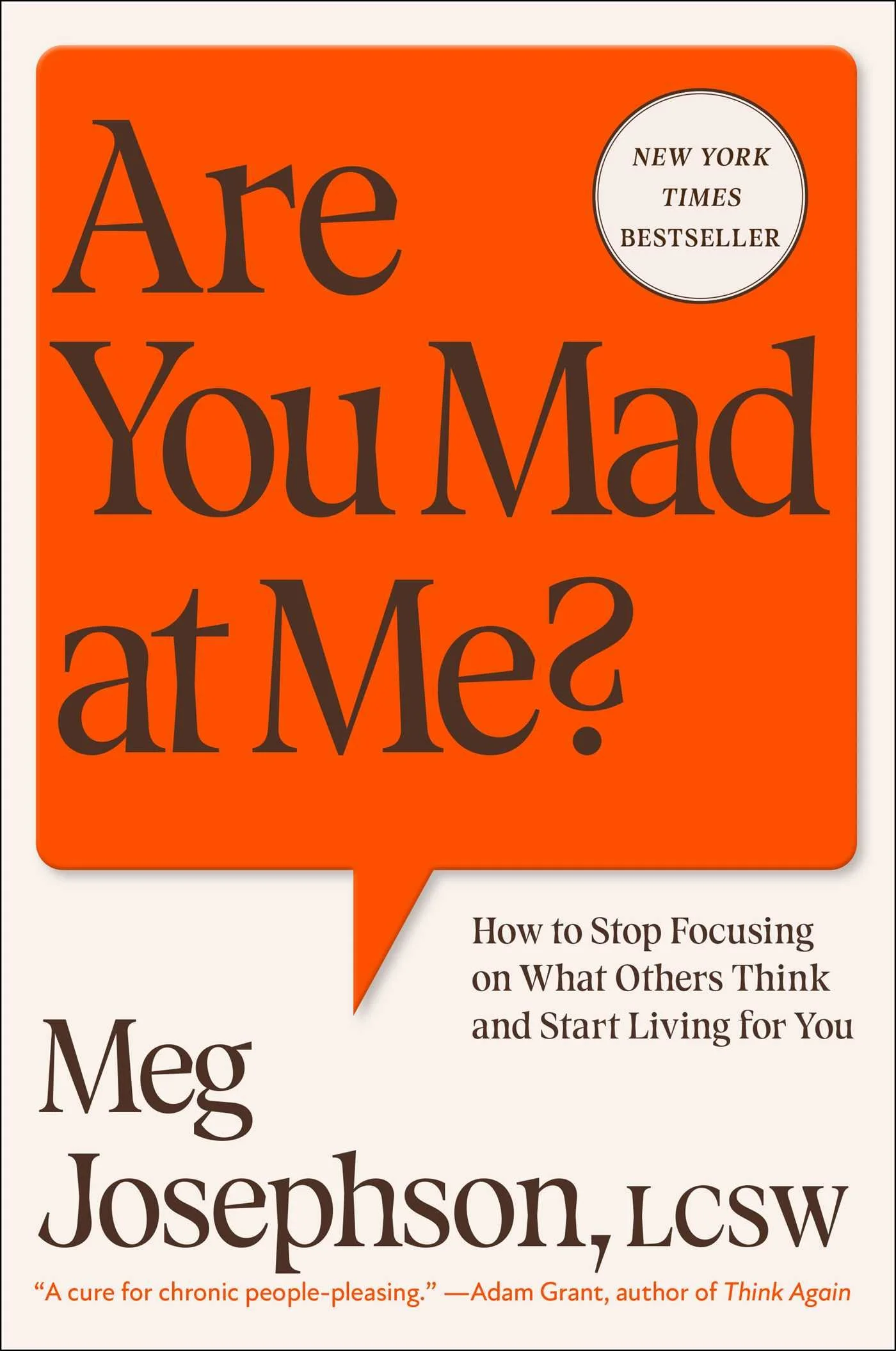
Are You Mad at Me? How to Stop Focusing on What Others Think and Start Living for You | Meg Josephson | Audiobook (read by the author) | February 2026 | 304 Pages
For the right type of person, the words “Are You Mad at Me?” in bold title print makes it feel like this book is already a window into their soul. That was true for me. I’ve spent (and spend) so much of my life worrying about whether other people are mad at me, whether I’ve unknowingly done something wrong, and how I can make things more comfortable and easy for people around me. The title of this book alone hit me hard.
That’s why I gave myself permission to listen to it—let it wash over me—rather than hold it in my hands and study every individual word. I knew it would be a tough read. The audiobook is read by the author herself, therapist Meg Josephson, who shares her ideas with the warm, authentic, and compassionate voice of a big sister who has learned things the hard way. Josephson tells vulnerable stories about her own experiences as well as evidence-based therapeutic approaches to heal, break old patterns, and reconnect with an abiding sense of safety in oneself.
The central focus of the book is the fawn response—the latest addition and most overlooked part of the Fight / Flight / Freeze / Fawn trauma responses. Fawning is about appeasing a perceived threat through people-pleasing and keeping the peace. It is an unconscious survival strategy that offers us a way to feel safe when we’re threatened.
To me, fawning lives right next to Autistic masking—both are strategies that emphasize keeping others comfortable in order to keep yourself safe. I am a master of both. I learned both skills early on in my life and have developed deep expertise over time, at great cost to myself. Reading books like this one help me to continue moving through the painful and empowering process of reconnecting with myself. It is alarming to realize how much I move through this world with my nervous system in active protection mode, always hypervigilant and hardly ever at ease. It is daunting to understand how to rewire my mindset and habits so I can feel safe.
This book planted seeds for that process, including affirmation of my experience and helpful mantras and strategies to use moving forward. I hope that I will someday feel strong enough to sit with a hard copy of this book, to underline the passages that resonate with me.
In the meantime, I will recommend it to others. And allow the seeds to grow within me.
I give Are You Mad at Me? 4⭐️’s.
January
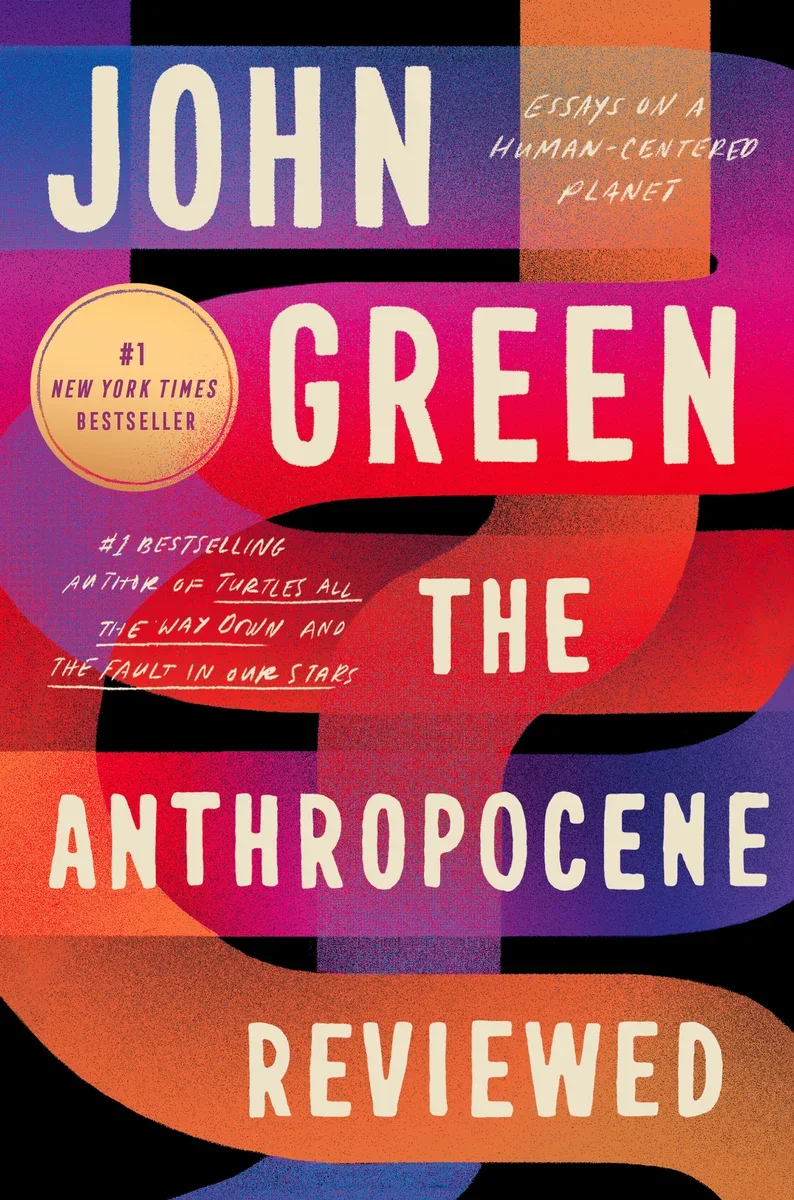
The Anthropocene Reviewed | John Green | Audiobook (read by the author) | January 2026 | 304 Pages
I listened to John Green’s The Anthropocene Reviewed during the Christmas season of my first year of divorce, driving from school pickup to dance, from an independent bookstore to Ocean State Job Lot, from work to Claire’s at the Providence Place Mall to pick up a mood ring and a tutu with matching wings. I listened to it while wrapping gifts in brown paper at my kitchen counter.
John Green’s voice was a gentle companion for the season—amiable, warm, informative, and thought-provoking. In this book of essays, he shares reviews of a wide range of things, from Diet Dr. Pepper to the ginkgo tree to scratch and sniff stickers to the smallpox vaccine. All of these things come from the Athropocene—the current era that we are living in, the era of humans on earth.
Green’s reviews read less like blanket recommendations and more like memoir. He is not so much reviewing Diet Dr. Pepper itself as he is examining his relationship with it. He authored the book during the pandemic, which blankets the book in an emo/longing/earnest tone, but I also am coming to understand that John Green himself is blanketed in an emo/longing/earnest tone, and I’m here for it.
Each review is three things in one: a mini history lesson, teaching me about why fans of a football club in Liverpool sing a song from the musical Carousel, or how a group of small boys discovered a set of ancient cave paintings in rural France, or what happened when cosmonaut Alexei Lenonov’s spacesuit expanded during a spacewalk, making it impossible for him to reenter the small door to the space station. Each review is also a window into Green’s life, be it a story from his youth, a trip he went on with his wife, or a fear that he carries in his bones everyday. And each review is also an invitation to wonder about what subjects I would choose to include in my own book of reviews of the Anthropocene.
Green ends his reviews with a star rating on a scale of one to five. He introduces it as a silly and arbitrary exercise at first, because how could we possibly distill something as broad “sunsets” into a star rating? But the practice becomes increasingly meaningful throughout the book as his initial reluctance melts away and he finally allows himself to award a five star rating. I could feel his confidence and earnestness growing as he gave himself permission to adore and appreciate the things that matter, even a sycamore tree.
It’s both a vulnerable and bold thing to write a review. To state for others to see, “This is what I think about this thing” and to imply that others should think that way about it, too. That’s why I’m reluctant to write reviews. But this book made me think about that differently. A review doesn’t have to be a confident, hot take told to others—it can be meaning-making for oneself. It can be an opportunity to reflect on your relationship to a thing, to remember stories that tie you personally to that thing, and explore metaphors around its significance to you. In this way, Green shows that reviews can be less of a prescription and more of an invitation. His authority comes from paying close attention to his subject. And that is, after all, his conclusion in the book: that the meaning of life is that we are here to pay attention.
This year, I plan to review the books I read. I plan to write short “reviews” (essays) on the things that I’m paying attention to—as a way of getting to know myself, as meaning-making, and as a way of building my confidence in sharing my point of view. The time for being neutral and hidden and masked is over. I am here to pay attention, and I want to share what I am attending to.
The Anthropocene Reviewed was my invitation. And I’d like to RSVP “yes.”
I give The Anthropocene Reviewed: 4.5 ⭐️
Grief is for People | Sloane Crosley | Hardcover | January 2026 | 208 Pages
I picked up a copy of Sloane Crosley’s Grief is for People at a used bookstore in Coventry, RI. The store was newly opened, and, as it was my first visit, I wanted to find something to purchase and support a budding independent bookstore (this one is called Binds and Blooms). Plus, I wanted to snag a bookmark for my collection.
It was the recognizable cover that jumped out at me from the shelf. The publishers were really pushing this one. I’d been seeing it all over, all last year—the solid, peach background with a pile of unwieldy purple letters spelling out the title, collapsing in the lower right corner of the book. It’s a weird cover. And grief, too, is weird.
I’m no stranger to grief. I evaded it for my first 27 years (a solid, fortunate stretch) before I lost my vital, beloved grandma (my mom’s mom), who collapsed suddenly in her front hallway and left an empty throne as the matriarch of our family. After that, it was my paternal grandpa, a silly, tall sweetheart of a man who used to hold my hand in church and tell me the same nonsensical jokes over and over in his deep voice over the phone. The last time I saw him, he was curled in a ball in a hospital bed, begging my dad to bring him home.
These were losses, but it turns out they were merely grief appetizers, a taste of what was to come.
Because then came the real deal—where grief showed up at my door and demanded a permanent room of its own in my house, in my heart. My mom died when I was 31 and nowhere near ready to be without my favorite person. The grief that has consumed me since losing her—for nine years and counting—in anything but linear, logical, and manageable.
Sloane Crosley’s memoir is a rumble with grief—throughout the book, she attempts to wrestle with it, reason with it, make sense of it, negotiate with it, chase it, and disappear it. She tracks her grief around three losses: first, a collection of family jewelry stolen from her apartment, then, just a month later, her best friend Russell who died by suicide, and finally, just months later, the loss of normalcy and connection during the Covid 19 pandemic. To Crosley, these three losses are inextricably tied up in each other. If she could just solve the mystery and find the jewelry, perhaps that will bring Russell back, she hopes. She sits on a stoop across from the restaurant where they last had a meal together and holds imaginary conversations with Russell, hoping to make sense of his sudden disappearance. And then, the pandemic shuts everything down. How often does a grieving person see their internal desolation reflected around them? Usually, one must mourn while the world continues to spin around us. But not so for Crosley. Her internal state is reflected in the desolate, grim NYC streets all around her.
I’ve read so many books on grief, searching for something to help me make sense of this dark being who lives in my house, who carved out a hole in the floor of my kitchen that I am meant to walk around and pretend that life is livable and normal when there is a HUGE FUCKING HOLE IN THE FLOOR OF MY KITCHEN. This is the book that comes the closest to capturing my experience with grief. “At night,” Crosley writes, “the hole in my heart was like a wind tunnel that whistled straight through until dawn.” Her grief is fierce, tender, and, at times, unhinged. Her narrative is wild, and the chronology is random, bouncing around in time. It makes perfect sense to me. This is the only way grief can be.
She shares it all—the nonsensical thoughts, the ugly desires, the anger, the questions, the longing that never ceases (“But I still miss you like you wouldn’t believe. The years have done nothing to dull the missing.”) Crosley chases her grief into a sketchy NYC building, bribing an underground diamond dealer in order to reclaim her amber necklace—not because the necklace itself is so precious to her, but because maybe, just maybe, if she gets it back, the grief of losing Russell will subside. It doesn’t.
She turns into “funeralzilla,” objecting to every detail of the memorial service planned for him, wanting to make it into exactly something he would have liked. “It took a small army to get it through my skull that people needed to mourn, and not just Russell’s five favorite people. A few more than that. They needed to sit in an auditorium and listen to speeches and poems, and some of those poems might be Auden. This is not actually about Russell. More to the point, it’s not about me. I am not the sole protector of this man.”
(This is the one thing that made me uncomfortable about this book: Russell is not my mother. He is a public figure, a well-known player in the publishing industry. This maybe explains why the publishers were pushing this book so hard—it’s not just a universal exploration of loss, it’s also inside gossip on one of their own, written by his best friend, a fellow industry insider. The book promises a possible explanation as to why he took his own life. I don’t believe that Crosley exploited that—the book feels so raw and genuine, like pages ripped from her diary, a conversation with her own psyche and not a play for the attention of the masses. But I worried that readers might be voyeuristic. I myself googled Russell while reading.)
It’s the personal, embarrassing, bizarre aspects of grief that I connected with in this book. Crosley imagines talking to Russell: “I tell him about how I’d tried thinking of him as one dead snowflake in the blizzard that had blanketed the earth, a blizzard that had now begun to fall on the city too. I told him how I’d tried to mix his death in with the others to make it hurt less. Or hurt differently. Like feeding a dog its medicine in peanut butter. Except I was the dog.”
When my mom was in the hospital in her final days, we brought things from home: picture frames that we set up on her windowsill, her favorite throw blanket, her own pillow from her own bed, which she would never sleep in again. I sat with her all day and returned to my childhood home to sleep each night. On one of those nights, I dreamed that everything in her hospital room turned into mozzarella cheese. I looked around and started grabbing things, stuffing them all in my mouth. I wanted to consume it all. I wanted every piece of her to become a part of me. I wanted to hold my grief tight to me. I didn’t want to move through it or get over it. I wanted to carry it as closely as possible. Nine years later, I still do.
Sloane Crosley understands that. I loved this book.
I give Grief is for People: 5 🌟’s
Strangers: A Memoir of Marriage | Belle Burden | Kindle | January 2026 | 239 Pages
In the pandemic of 2020, I fell down a rabbit hole of reading. I went from finishing 5 or so books per year to 85.
I attribute this to two factors.
First, I got a kindle. After resisting it for some time, insisting that I’m one of those people who likes to feel the pages in my hands, I gave it a go. And my reading skyrocketed. I was able to borrow books from the library at the click of a button, stacking up my hold list with a lineup of juicy reads. I had an infant in my arms that year, and being able to read with just one pointer finger to advance the pages meant that I took in far more than I would have in analog mode. And when I was awake at all hours, I could grab my kindle and read in the dark without turning any lights on. (I was awake at all hours a lot).
The other factor was my reading selections. I finally gave up reading books as though they were vegetables—choosing titles that I should like or enjoy. Instead, I read what interested me with abandon. I started reading exclusively contemporary romance, love stories of every shape and size and representation that all gloriously ended with the happy couple together. This was especially important as I held a baby in my arms during a global pandemic—I didn’t want to have to worry about the characters. I liked the steady, predictable format of it all, knowing that it would all work out. In a year of unprecedented uncertainty, it was a small comfort.
My delight in contemporary romance ran rampant for the next four years. I voraciously read one after another, multiple books in one week. I prided myself that, if you told me a location, a profession, or a challenge, I could make a personalized recommendation for a book connected to your prompts. The genre was exploding, and I had read them all!
But when my marriage ended in 2025, I lost my taste for contemporary romance. It was like a switch was flipped. What was a delicious escape turned sour in my mouth. Even my favorite authors’ new releases were a slog. So I’ve moved on.
Now, I am fascinated by books about the end of marriage. I am studying it. So when I saw Belle Burden’s new memoir, Strangers: A Memoir of Marriage, I smashed the button to add it to my library hold list.
Belle’s story begins in March of 2020, when she was quarantined with her husband and three children at their home in Martha’s Vineyard. As she washed the dishes after dinner, she received a voicemail from an unfamiliar number. It was a man saying, “I’m sorry to tell you this, but your husband is having an affair with my wife.” Her husband owned it right away, and assured her that it had only been going on for three weeks and meant nothing. He begged for her forgiveness and promised they would work through it. But the next morning, he came into her bedroom wearing a coat and holding a suitcase. “I’ve decided I want a divorce,” he said. “I’m leaving. You can have the house and the apartment. You can have custody of the kids. I don’t want it. I don’t want any of it.”
She had thought they had a happy marriage. He offered no explanation, and there were no warning signs. This book is an attempt for her to understand what happened, to trace the threads of their story and shape it into something that made some sort of sense.
Burden retells their meeting at an elite law firm in New York City, the dynamics of each of their own parents, the birth of their kids and choices they made around careers, finances, and family building. It is a measured look at divorce—she is critical of his behavior, but also of her own. Throughout the book, she transitions into italics, asking all of the questions swirling in her mind. (“The way he is moving and talking is so different. I don’t recognize his body, his voice. Is he having a breakdown? Is he in love? Is he just delighted to be free of me, of us?”) She will never get answers to these questions. He never offers an explanation. Even now.
Alongside all of the italic questions is an invisible one: Why did she write a memoir about this? Why did she choose to share this with the world? She charts the blowback that she received after publishing a piece of her story in the NY Times Modern Love column—to many people, her writing about it is almost worse than him leaving her. How could you do this to your children? people asked. It is so disgustingly gendered. Her husband left three teenage kids. How could HE do that to the children and get away with it, running his hedge fund, making millions, and acting as though Burden was the one who was unreasonable and unhinged?
It was a tough read. At times, I felt dizzy and nauseous. I raced through the pages so I could finish it and move on with my life. This is not a contemporary romance with a happy ending. It is a real, messy story about real, messy life. It is so hard to trust in this world. So hard to hear that even a 21 year marriage where all seems well can fall to pieces in less than 24 hours. It is hard to trust men.
But at the same time, I loved it. I love it more and more as I let the story settle within me.
I am trying to answer for myself why she chose to write this. In part, it is an investigation in the hopes of finding the answer as to why he made this choice. It is also to write her way through a traumatic experience, to heal through self-authorship. It is also to end generational cycles of women covering up for men, cleaning up their messes. She makes this mess visible. She will not be polite and deferential. She will not hide this mess. It is to find the strength of her own voice. It is to model for her children that telling your own story is important.
[The writing is not nearly as beautiful or skillful as Grief is for People, and the metaphor of the Osprey nest at the Martha’s Vineyard house is a bit belabored. It reads a bit like “This happened. And then this happened. And then this happened.” The beauty is not the writing. It is in the story. Also, what a fascinating read after Elissa Altman’s Permission. Permission to tell this story is, wow.]
I give Strangers: 4 🌟’s
Consider Yourself Kissed | Jessica Stanley | Hardcover | January 2026 | 336 Pages
I picked up my copy of Consider Yourself Kissed at Island Books in Middletown last summer, on my first date in 16 years.
When Mark and I matched and realized that we both had the day before July 4th off, we agreed to meet up for an afternoon in Newport. I told him: “I am on a quest to visit every independent bookstore in the state of Rhode Island, and you could help me visit the last one on my list.” He said, “I love a quest.”
When we walked into the tiny shop, I breathed in the smell of fresh pages. I thought I was a little cheeky when I picked out this title, which I’d been hearing about as a new release. Consider Yourself Kissed seemed appropriate for getting back out there. I tucked the bright yellow cover under my arm and we went out to lunch.
The date was not a success, but I do have this book as a souvenir of being brave enough to step into my own next chapter. And I finally got around to reading it this January.
After reading contemporary romance for so many years, it’s a funny feeling to dive into a book when I don’t know where it’s going or how it will end. This is the story of Coralie, an Australian publicist who finds herself in the UK as part of an overseas transfer following inappropriate behavior on the part of her male boss (and as the woman, she, of course, absorbed the impact).
Coralie meets a divorced Dad, Adam, and the story follows her experience as they move in together, become a family with his daughter, Zora, and have two children of their own. Coralie’s career takes a backseat to Adam’s, and she struggles to care for the children, the house, Adam, and herself. We learn about her background with an abusive father. She must once again confront her abusive boss when he visits the UK office. Neither of them are held accountable or confronted in any way. It is a sad story of being steamrolled by men. The swift tied-up-in-a-bow ending, when Adam finally proposes after years of delaying marriage due to his growing career, left me with no hope that their dynamic would truly change. Perhaps it’s my cynicism right now, or my own weariness with men and unequal relationships, but this book left me feeling bummed.
“In the back garden of the house on Graham Road,” Stanley writes near the end of the book, “a funny thing had happened to a tree. It was, or had been, a birch. Over time, ivy had grown around it, bending the tree within. Now the ivy was as thick as her forearm, and the tree inside it was crushed. Could two living beings entwine without one of them having to die?”
I am wondering the same thing, but I am not hopeful about the answer. I am more interested in being unencumbered by ivy right now, alone with my books and my solo visits to delicious independent bookstores (since last summer, more have sprouted in RI)!
I give Consider Yourself Kissed 3⭐️’s.
