
Four Key Areas of Emotional Intelligence
You’ve likely heard the term “Emotional Intelligence” before, but have you had the opportunity to explore what it means beyond a vague sense of “people skills”?
Emotional intelligence is the ability to recognize, understand, and manage emotions in yourself and others. Researchers explored the concept as early as the 1960s, but it was science journalist Daniel Goleman who popularized the concept through his book Emotional Intelligence: Why It Can Matter More Than IQ in 1995. We’ve been talking about it ever since.
If I had access to a time machine, I'd love to hop in and convince these dudes to name this concept something different. Emotional Intelligence (sometimes shortened as EQ) makes it sound like a fixed talent that you either got or you don't. But it's not. Emotional Intelligence is a skill set that you can (and should!) develop.
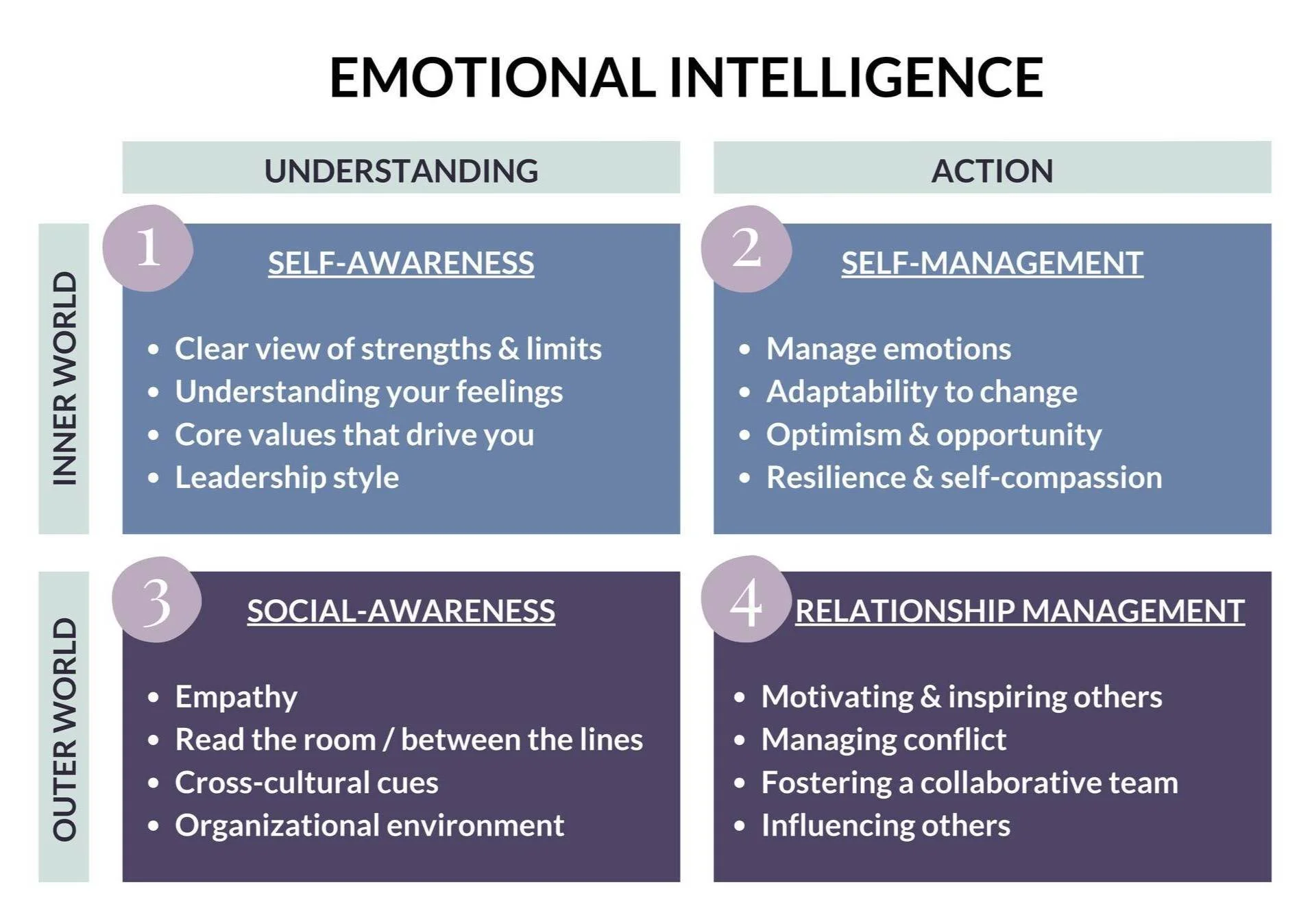
There are four main areas of emotional intelligence:
1: Self-Awareness. This is how attuned you are to yourself. When you feel an emotion, can you identify it? How clear a view do you have of how you show up? Self-awareness is trickier than it seems—we all think we’re more self aware than we actually are. You need to actively carve out time for reflection and seek feedback to practice self-awareness.
2: Self-Management. This is your ability to manage your own emotions. That doesn’t mean not ever showing emotion at work—it means that when you do, you’re doing it on purpose. Self-management also includes your ability to roll with unexpected curveballs and view them as opportunities rather than obstacles, as well as your resilience to bounce back after a setback.
3. Social Awareness. This is how attuned you are to other people. To what extent are you able to empathize with others and recognize that they may see and experience things differently from you? How well can you read the room when the vibe is off at a meeting? Appreciating that others see the world differently is essential to collaborating and connecting with others.
4. Relationship Management. This is your ability to leverage your attunement to others in order to effectively reach them. When you can truly reach others, you can influence them to get on board with your ideas, collaborate effectively, and manage the inevitable conflict that will emerge in a team environment.
Your turn
• Which of these areas do you feel strongest in?
• Which do you think needs the most development?
• Not sure? Take this simple self-assessment to decide.
Next steps
Here's a resource to develop in each of these areas:
1. How to Develop Self-Awareness and Unlock Your Full Potential | Better Up
2. How to Develop and Practice Self-Regulation | Verywell Mind
3. The Skillsets of Empathy with Adam Grant and Brené Brown | The Dare to Lead Podcast
4. Six Actions for Developing Relationship Management Skills | Management Matters
